



WE LOVE KOYO KOUOH’s conceit for the main exhibition at this year’s Venice Biennale: an invitation to block out the phallocratic noise and tune in to the whisper, the seam, the off-piste, and the trace. To listen for what might rise from below. At a time when the blundering, self-appointed “masters of the universe” wield their power to devastating effect, Kouoh’s delicately assured proposition seemed poised to deliver one of the more intriguing curatorial experiments in the Biennale’s 130-year history.
So it was devastating that Kouoh herself did not live to see her vision through. The fifty-seven-year-old curator passed away in May 2025, not even halfway through her term with the world’s oldest and highest-profile art exhibition. She was only the second African to serve as artistic director, after Okwui Enwezor, another international art animateur who died too young, at age fifty-five, in 2019. The task of realizing Kouoh’s vision for her exhibition, titled In Minor Keys, was ultimately taken up by a group of her colleagues and friends: Gabe Beckhurst Feijoo, Marie Hélène Pereira, Rasha Salti, Siddhartha Mitter, and Rory Tsapayi.
At any biennial, there is always too much happening, at the main events and on the margins: collateral shows, performances, talks, DIY projects. At Venice this year, all manner of controversies gave rise to solidarities in action, direct and indirect—strikes, sit-ins, contestations, and convivialities—like a whole world in parallel. We invited a clutch of curators, critics, artists, architects, and others to write about the art, events, and experiences that provoked them. What follows are thoughts and responses by Sophia Al-Maria, Alia Al-Senussi, Emily Jacir, Quinn Latimer, Momtaza Mehri, Ken Okiishi, Yasmine Seale, Roisin Tapponi, Sam Thorne, and Sumayya Vally.
— The Editors
Momtaza Mehri
More than once, I heard someone describe this year’s Biennale as a family reunion, an ecosystem that brims with tension and tenderness. Step across the threshold of the Central Pavilion of the Arsenale, and the work of the late Senegalese iconoclast Issa Samb greets you in a “shrine” reconstructing his courtyard studio. An untitled painting by the artist hangs there, an apparition-like cloud of fragmented forms against a solitary, wide-eyed African mask, hovering above the prophetic words of Gazan poet Refaat Alareer: If I must die / you must live / to tell my story.
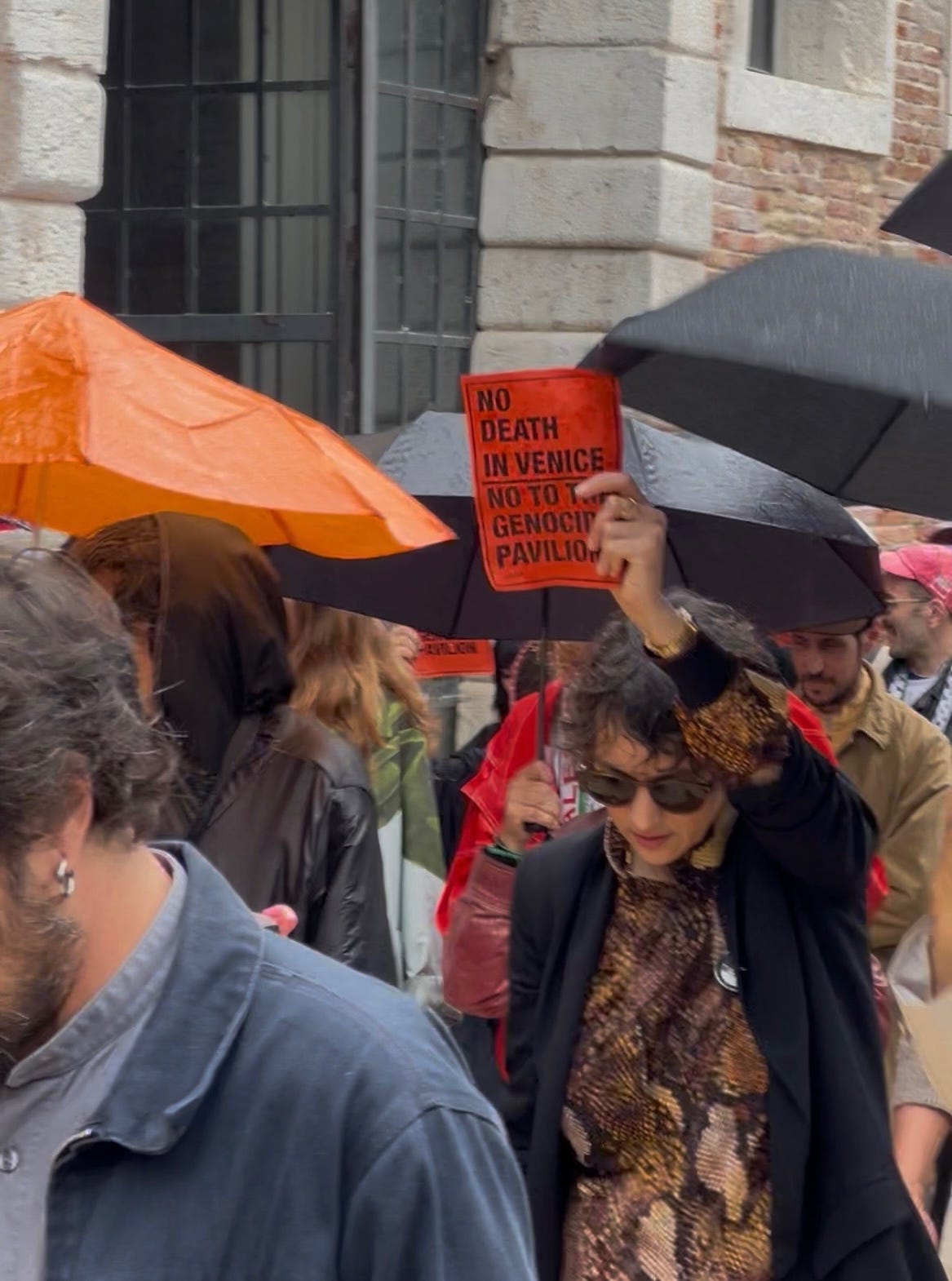
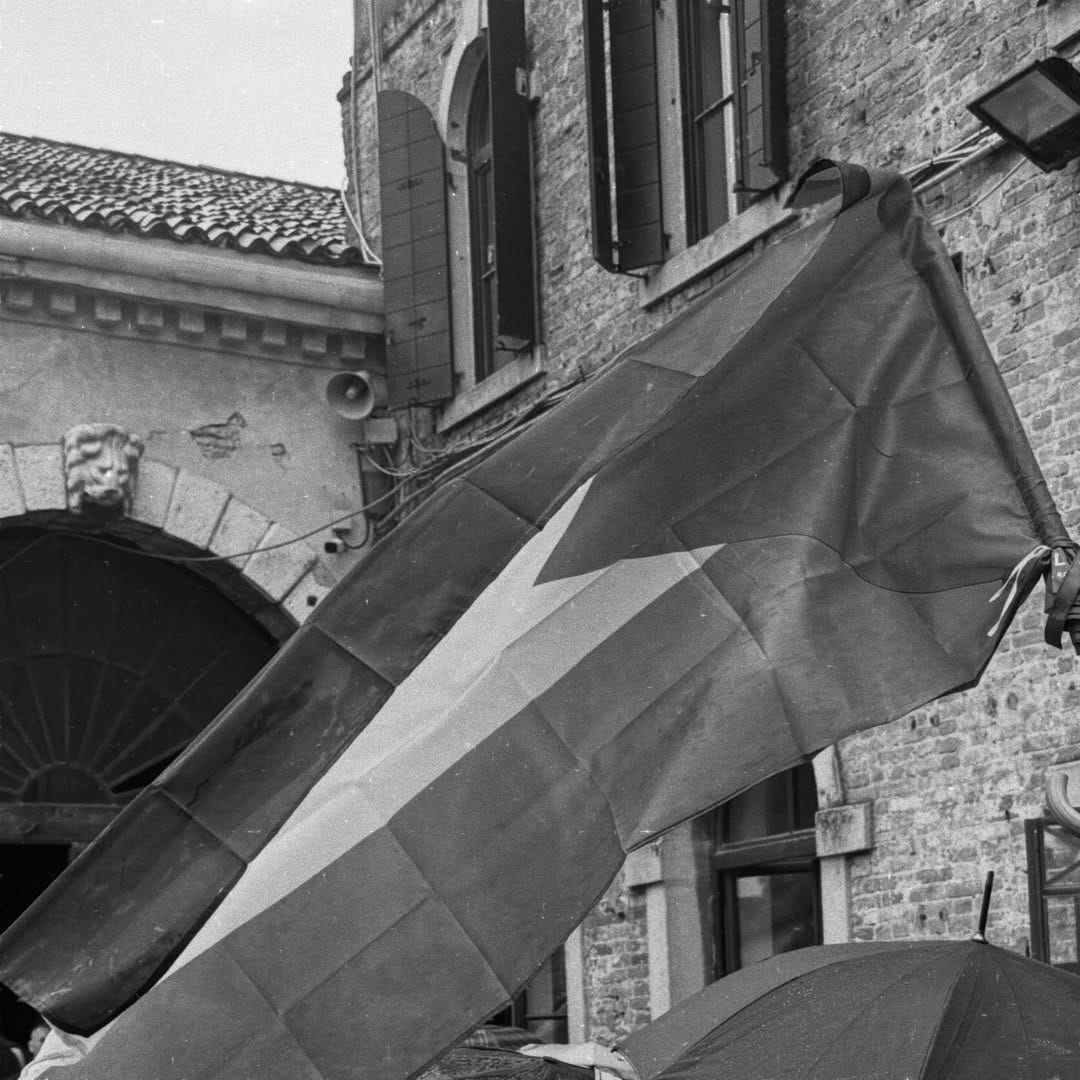
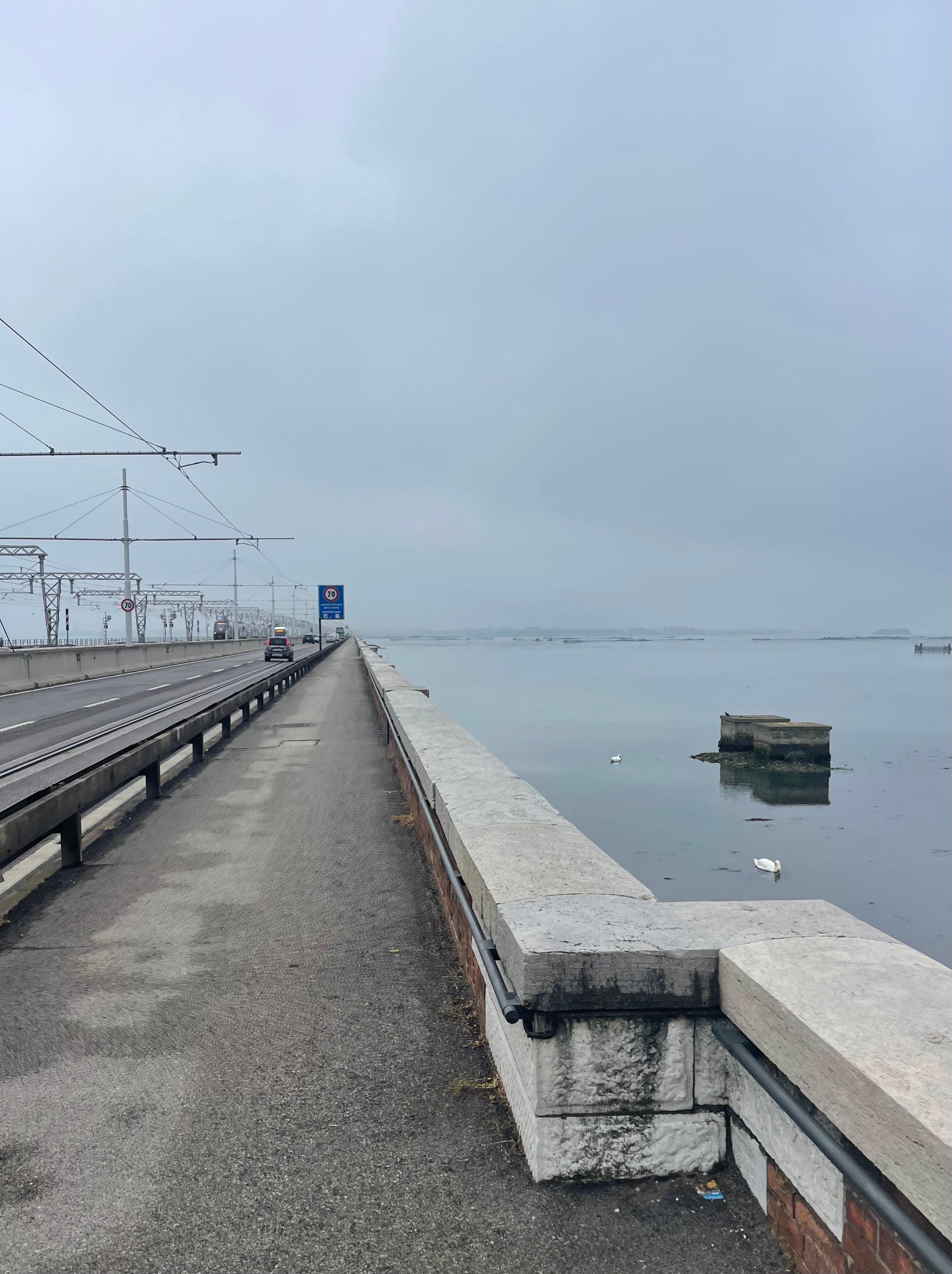
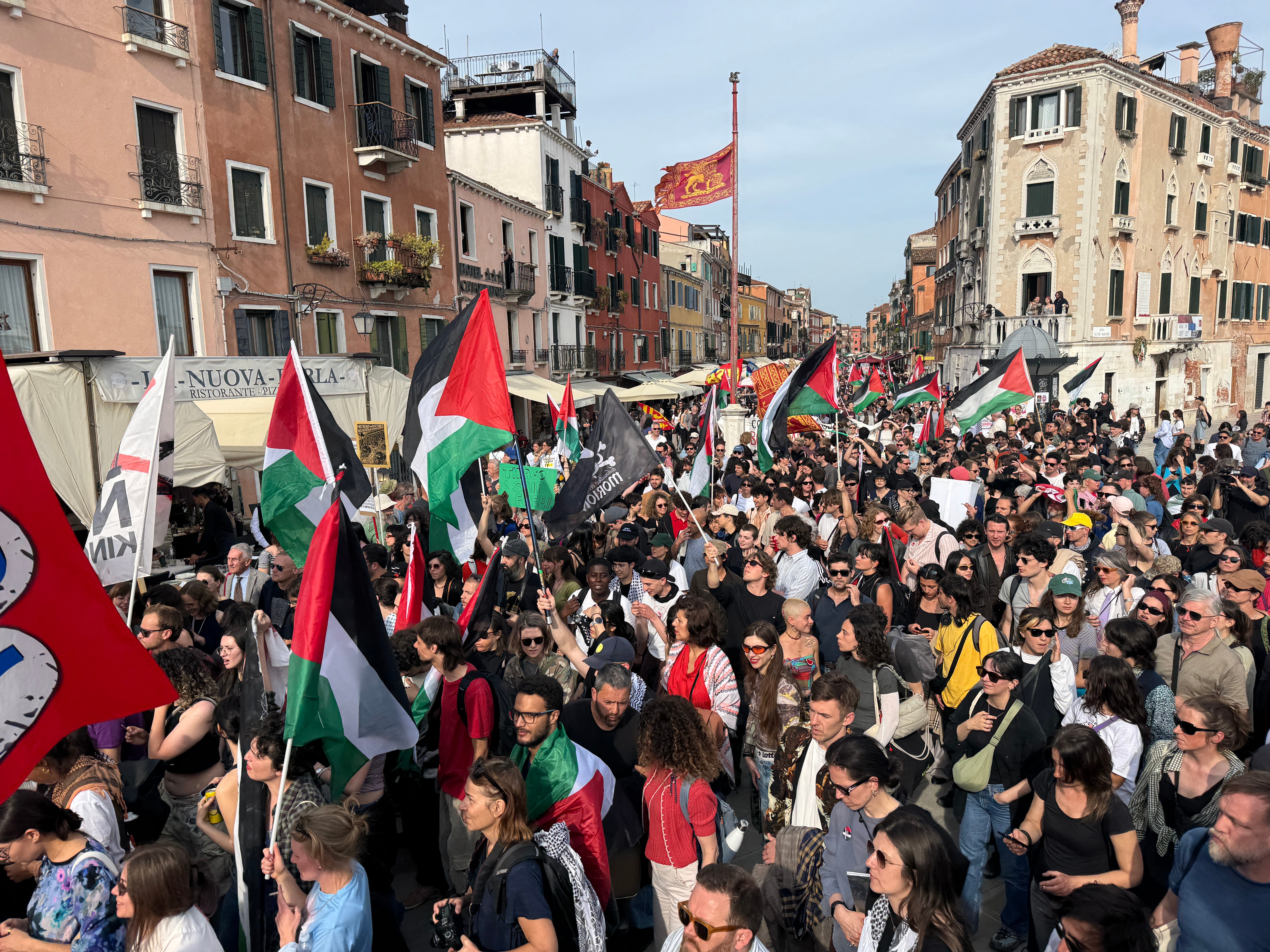
In Minor Keys, the 61st edition of the Biennale, is thick with relational history, the intergenerational and transnational webs of connection and collaboration between African artists, thinkers, griots, and gallerists. At the Giardini and off-site, around dining tables and at vaporetto stops, amidst demonstrations and afterparties, the decades-deep organic bonds were palpable, untethered from the art world’s tokenism, its pick-‘n’-mix attitude towards that heaving mass called the Global South. Dissonance flared up like bad rashes, evident in poster campaigns, shut pavilions, strikes, and jury resignations. Protesters locked arms, countering the spectacle of opening week with their own. Some carried Ukrainian flags, blocking the Russian pavilion from view. Thousands of marchers lined the via Garibaldi with Palestine on their tongues and in their hearts. I saw riot police looking listless. Wherever I went, there it was: the sickly whiff of institutional decay. This Biennale, so passionately rooted in African and indigenous cosmologies, and the first with an African woman at its helm, is engulfed in a moral drama, rife with nightmarish intrusions on the sanctity of “art for art’s sake,” on the very experience of the Biennale as a driver of speculation and spectacle. The event’s resource-gobbling, long-criticized national pavilion model felt exposed and particularly outdated on the cold slab of our political reality.
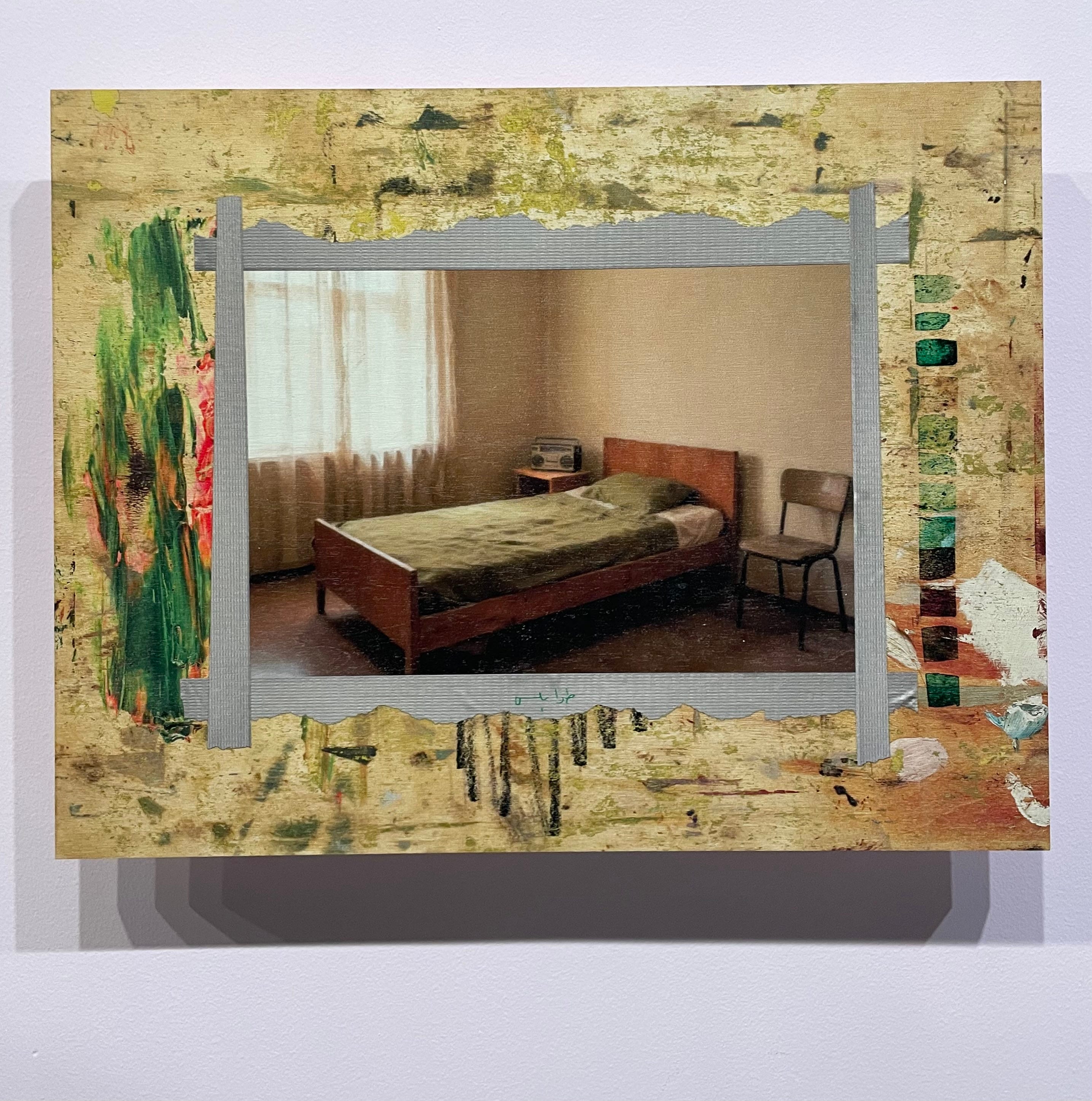
Dissent and disavowal charged the atmosphere, often scattering my attention. It was a relief then to fall into a bed and stay there. Walid Raad’s Far from quieting (1969–2026), eleven paintings of bedrooms that Yasser Arafat kept in various cities, was a highlight for me. Evading numerous assassination attempts, the PLO leader reportedly never slept in the same place twice. Raad crystallizes the slipperiness of the hunted, the conundrum of a stateless head of state, with images of pristine sheets and spartan rooms from Tripoli to Oslo, each bed exquisitely bereft. Raad offers a reverberant version of history that scrapes against official documents and records, troubling the fraught archive of seemingly endless wars. In these moments, In Minor Keys leaps beyond the calculus of air miles and air kisses that characterizes this pinnacle of the international art calendar, giving way to something quieter, something at once beautiful and besieged.
Sophia Al-Maria
In the art world, there are two kinds of visibility. One arrives via the guest list, whether by name or as the plus one (never a minus one), granting entrance to ever smaller rooms crammed with ever larger egos, swish parties charged to Swiss bank accounts, where you will be tagged in Getty Images photos you never signed a waiver for. The second kind of visibility is posthumous. (The dead were very present at the Biennale this year). To quote comrade-artist Bhenji Ra’s 2021 tweet, “What’s visibility without protection? A trap.” I have to admit, Venice can feel like a trap sometimes, depending on why you are there and who invited you. This was my third dell’arte, a promise betrayed. (After the last one, I swore I’d never go back; I really do have to stop swearing.)
I was in Venice to do the (art)work and to attend a strike. I was presenting an original work, DAMAR TV, Or: How I Stopped Doomscrolling and Learned to Sing, at the temporary home of the new Qatar Pavilion—the first new entry to the Giardini since South Korea’s debut in 1996. The life cycle of this new work was, in a word, brisk, commencing on March 1st, the day the war began to impact Qatar in ways it previously had not, and concluding two months later. It was perhaps an unusual time to be making work for the nation-state themed amuse-bouche-ment park that is the Biennale, especially on a site located across from the Trump-l’œil US Pavilion and the currently out-of-order Israeli Pavilion. Otherwise, my experience was much like it always has been: stressed out about not showing face where face (mine) was expected, about getting lost, usually in conversation with one or another stranger I should not be talking to for so long. Topics this year included: the aberration of German state theater, the feasibility of training crows to attack bigots (it can be done), Toto Koopman (look her up), and the latest permutations of the wars.
I do not have the spatial navigation or facial recognition skills to stay afloat even in the most predictable social tides, so Venice is extra hard for me. I missed almost every event I was contractually meant to be at; it turned out that I was not eager to be anywhere in this age-old city that seems today to serve solely as a scaffolding for being seen. Every bridge here is a runway. Every palazzo (which one chatty stranger assures me means “building,” not “palace”) is a backdrop.
One evening I went to a dinner commando-style (that is, not wearing my glasses) and, upon arriving, found a seat on an unreasonably low sofa alongside the only other person who appeared through the blur to be alone. I took a breather after the exertion of squatting and turned to my left. As my nearsightedness kicked in, I blurted a confused greeting: “Oh! It’s you!” From behind a drape of grey hair, the visage of Patti Smith emerged, saying: “Yep.” I thanked her for holding Palestine close, and she pulled a well-washed white t-shirt out from under her blazer. “I made this myself,” she said, pointing to the word GAZA scrawled in ballpoint. Not long after, the electricity went out (poetic justice), and we were escorted from the palazzo by candlelight.
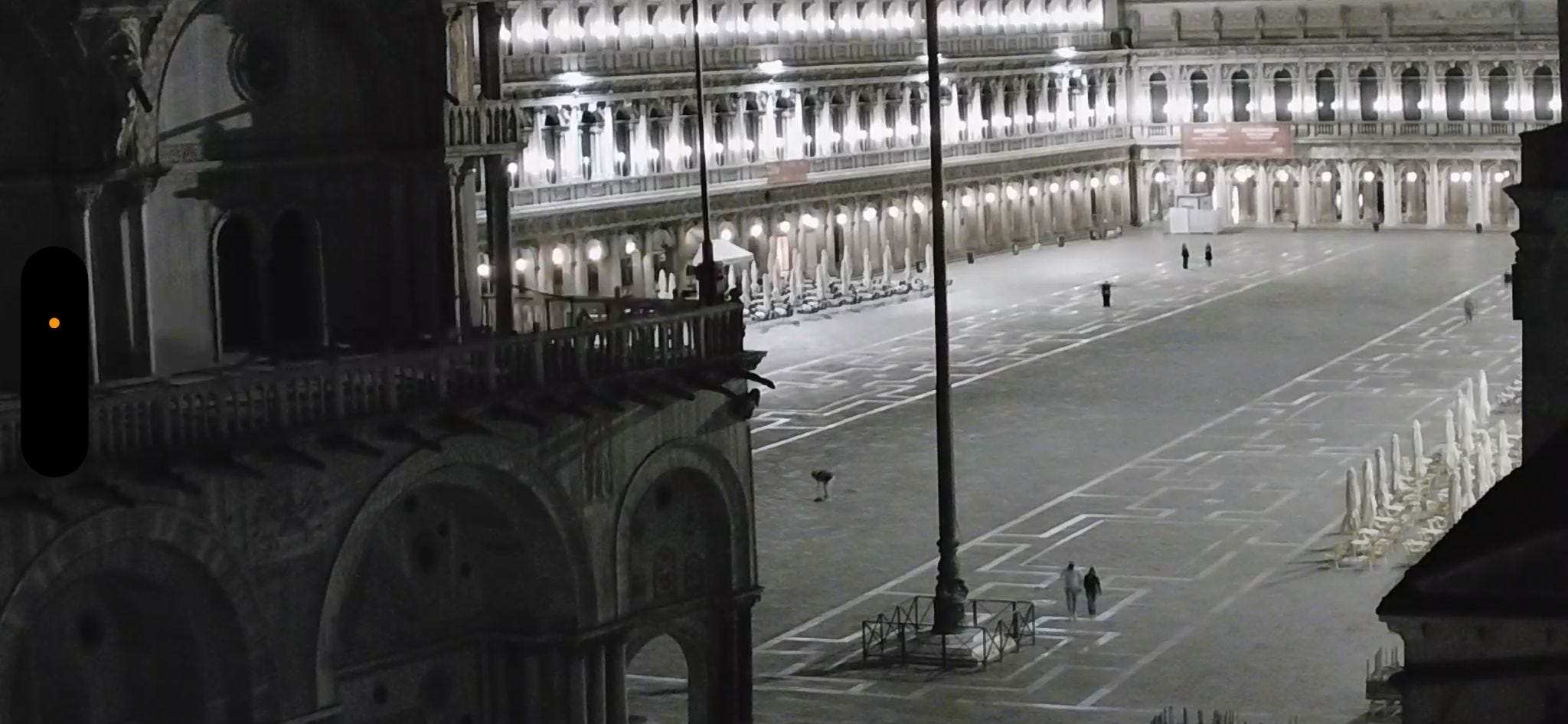
But the highlight of my Biennale Art Venice 2026 was undoubtedly the impromptu midnight proof-of-life livestream, courtesy of a local CCTV camera, in San Marco Square the night before the press preview. Behold a screen grab captured from many time zones away by the artist Martine Syms, or by my sister, Sarah, an elementary school teacher. Yes: that’s me in the streetlight, losing my battery, stopped smack in the middle of San Marco Square on my way back to my hotel in Sant’Elena. Martine and Sarah were the only ones to respond to the link I’d sent out soliciting soft surveillance as I stomped my way homewards. My sister tried to direct me—“Spin around! Go talk to that person! Collect that coin!”—but Martine, a true comrade-artist if I ever had one, understood that I was just another NPC in the art game and that her role was to bear witness without comment. The next morning, I woke up to a text from her. “That was satisfying,” she said. “Thanks,” I replied. “I feel so seen.”
Sumayya Vally
It feels impossible to separate Venice from the world beyond it. Palestine moved through conversations, readings, walks, gestures, silences.
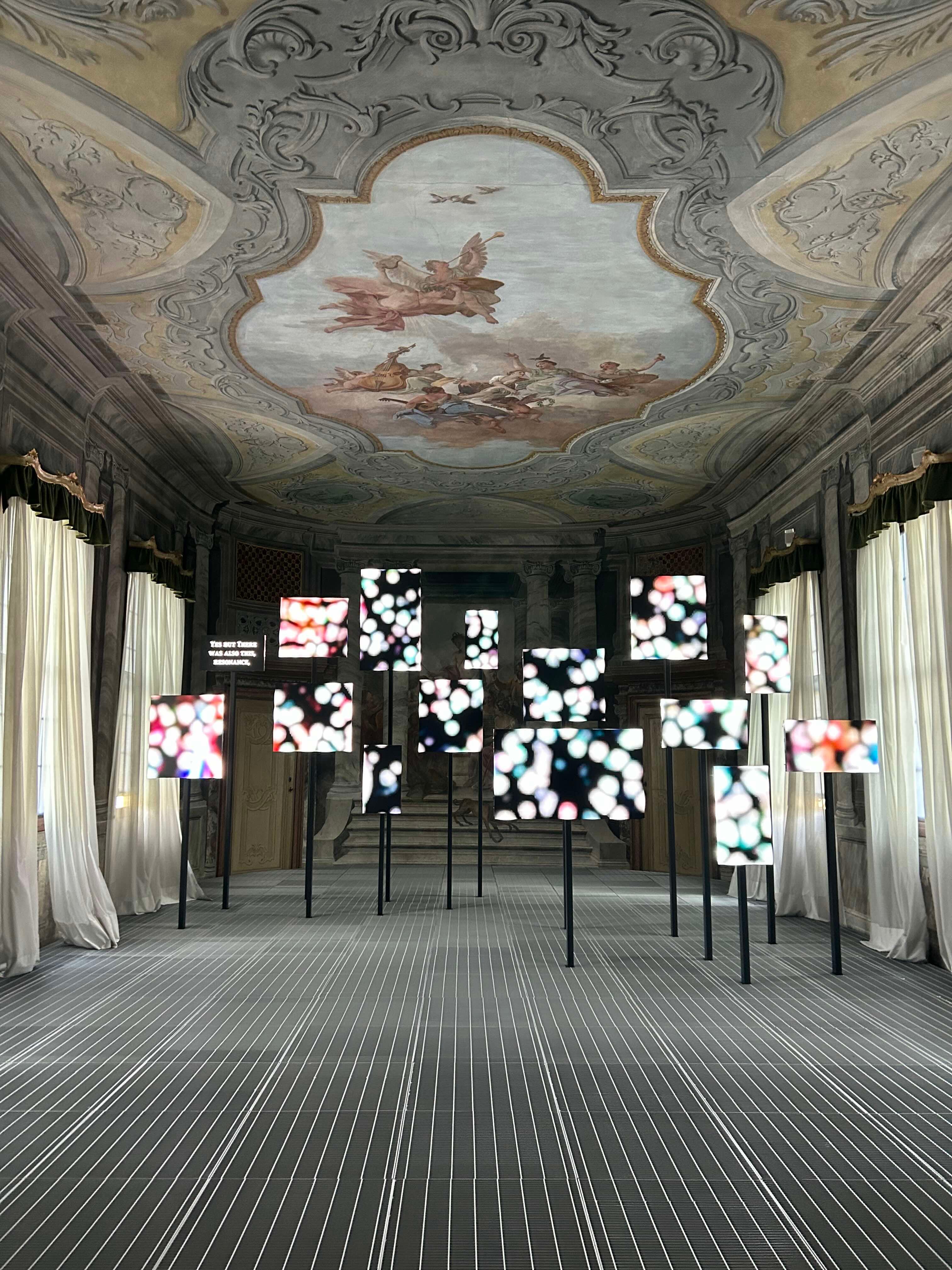
The work at the Biennale that stayed with me most viscerally was Lawrence Abu Hamdan’s installation in CANICULA titled 450XL: The Story of a Fugitive Sound, an investigation into the alleged use of sonic weapons against protesters in Serbia. Fifteen screens were held like protest placards inside the old music room of the Ospedaletto, frescoes of musicians overhead, testimony unfolding through vibration, frequency, aftermath. Abu Hamdan’s work was forensic and haunting and strangely beautiful. I don’t think I will ever think about post-concert sound in the same way again.
Hearing him speak alongside Ghassan Abu-Sittah at the launch of Palestine Is Everywhere felt like reason enough to come to Venice. They talked about responsibility, about doing whatever we can with whatever we have in the face of genocide. There was also a reading by Palestinian writer Nahil Mohana of diary entries from Gaza that were funny, intimate, and devastating, one describing buying coffee for 170 dollars.
I got caught unexpectedly in the silent walk organized by artists from Koyo Kouoh’s exhibition, which ended with a reading of poet Refaat Alareer’s “If I Must Die.” Bidoun’s gathering around Etel Adnan also felt deeply necessary, their voices refusing disappearance. So too did Gabrielle Goliath’s Elegy, presented by Ibraaz, a performance carried by breath, repetition, and choral lament. In a time when images of suffering are quickly circulated and consumed, the work insisted instead on slowness, listening, and the dignity of collective grief.
And then there were the pavilions: Dana Awartani’s May your tears never dry, you who weep over stones, a meditation on grief and repair at the Saudi Pavilion; Yto Barrada’s elegant weaving together of myth, politics, and material histories in Comme Saturne at the French Pavilion; the Saudi Ministry of Culture’s A Necessary Fiction: Maps, Art, and Models of Our World, which reorients worlds through southern cosmologies and speculative cartographies.
More than the exhibitions, what stayed with me were the moral encounters in a Biennale asking what is art for while the world burns. Palestine is in the rooms, in the pauses between sentences, in the trembling of voices, in the refusal to look away. Palestine is everywhere now: in our language, our thresholds, our griefs, our responsibilities to one another—a condition through which the world is being revealed.
Sam Thorne
Many of the disappointed responses to Koyo Kouoh’s unfinished final exhibition In Minor Keys noted its by now familiar tics and tropes. Peaceful gardens? Check. Ceramic creatures? Check. Figures with trees for heads? Check. At this point we’ve seen all the above in large-scale biennial-making for more than a decade, and there is a feeling of exhaustion with all this enchantment, not to mention with biennials in toto.
In 2018, Kouoh curated a section of the Carnegie International titled Dig Where You Stand. Informed by Édouard Glissant’s writing on rhizomes, and with a title borrowed from Sven Lindqvist’s manifesto on workers’ self-education, Kouoh’s presentation was preoccupied with roots and excavation. In Venice, too, the subterranean imaginary provided a potent if (appropriately?) overlooked aspect of the exhibition.
Some clues to Kouoh’s thinking: an intricate drawing by Pio Abad depicting a stack of books used as a stand for a potted plant. Halfway up, the catalogue for The Way of the Shovel, a 2013 exhibition at MCA Chicago on art and archeology, is pointedly placed above Foucault’s Archeology of Knowledge. Other crumbs to follow: playwright Werewere Liking’s wonderful paintings of strata beneath a wonky metropolis; Yo E-Ryou’s underwater maps, made while living among the haenyeo divers on Jeju Island, Korea; Joana Hadjithomas and Khalil Joreige’s Unconformities, which displays what lies beneath our feet in an ongoing series of annotated core samples analyzed by geologists and archaeologists. Here we encounter traces of an ancient fire that once razed Beirut, so hot that it was said to have turned stone to ash, now mingling with the reconstructed bedrock of the city, engulfed and ungrounded. Venice’s richer moments, however fleeting, required going underground, getting lost in the dark.
Emily Jacir
In Minor Keys is a powerfully composed exhibition that embodies the personal and political, protest and urgency, alongside poetry and beauty. The events which occurred in and around Koyo Kouoh’s presentation was deeply intertwined and integral to it. I see this year’s Biennale as one of the biggest political developments and historical actions since 1974 when, in a major cultural protest against the dictatorship of Augusto Pinochet, the President of the Biennale, Carlo Ripa di Meana, dedicated the entire edition to Chile. The Biennale did not take place that year, and instead solidarity events were organized including conferences, performances, an exhibition of political posters, and much more. The 1974 Biennale was a massive act of refusal and solidarity. I see what transpired at this year’s edition, and in the months leading up to its opening week, in that lineage. However, instead of cultural institutions drawing clear lines, it was the people who did it. It was soul-stirring to see the solidarity and love between artists, curators, jury members, students, installers, and workers, together all organizing actions, readings, gatherings, protests, refusals, strikes, commemorations, and performances. Palestine was everywhere; in the artists’ works, across pavilions and in the streets, and on a personal level I was deeply moved to witness thirty years of work, allyship, and sacrifice unfold across Venice. For the 2013 Biennale, I hand-painted my large SOLIDARIDAD banner alone in a dark palazzo, imagining the collectivity and solidarity that went into making the murals in 1974. This year people gathered and built in all the ways I had imagined people did back then.
Another aspect that really struck me was the strong presence of work committed to performative practices. The Fortress by Dries Verhoeven for the Dutch Pavilion was a masterpiece and one of the strongest works in the national pavilions. A haunting and powerful architectural intervention, it shuts down its own pavilion and makes viewers inhabit the darkness alongside a fierce performance. With an economy of means, Verhoeven ruptured space and time, laying bare the horror and contradictions of the world we inhabit now.
Yasmine Seale
Up a spiral staircase in the Ospedaletto, a shelter built for victims of a sixteenth-century famine, in the music room where choirs of orphans once performed, a film by Lawrence Abu Hamdan plays on a loop. 450XL: The Story of a Fugitive Sound—about the best thing you could do with nineteen minutes in Venice this summer—investigates an attack on a silent vigil against government corruption held in Belgrade in 2025, when the crowd was sent scattering in panic by a sound that bore down like a vehicle at speed. Abu Hamdan gathered thousands of accounts of this new acoustic weapon the state denies. Across a forest of screens, like banners raised in protest, mesmeric aerial footage of the phone-lit demonstration is laced with a chorus of testimonies, “earwitnesses” to the invisible violence. The piece continues the artist’s preoccupation with hearsay, whispers, pauses, drones, dropped syllables, single decibels, high frequencies—aural matter out of place, too watery to name. The craft of the private ear (his self-declared profession) is to tune in to this lagoon and find a language for its lack. Arabic names it best: tashweesh, the sound of a rumor spreading or of someone listening in.
Quinn Latimer
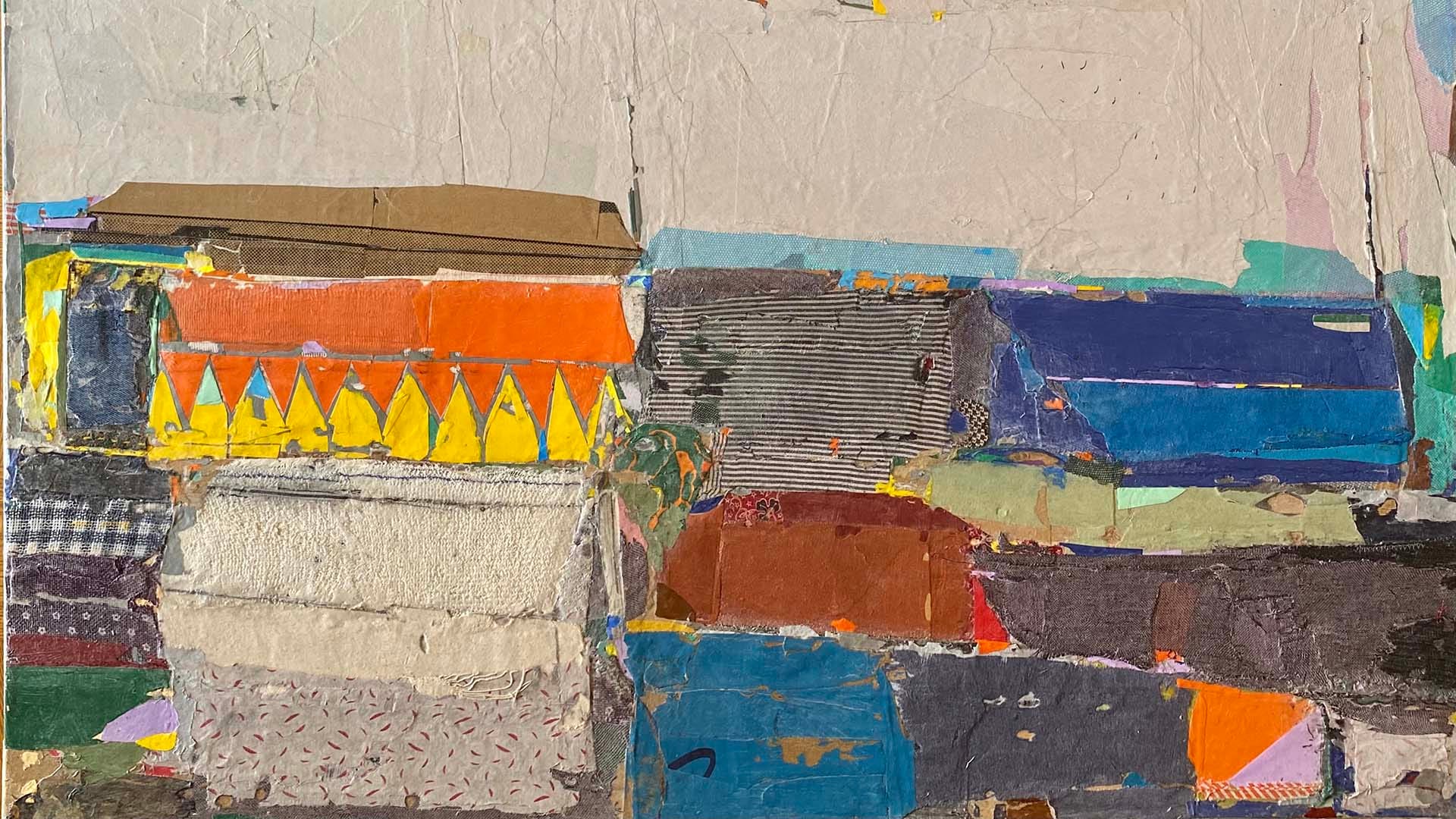
I saw the paintings and collages by Mohammed Joha from a distance, deep in the back of the central pavilion. The ragged architecture of his stacked lines and luminous forms, ripped from the world and its poor materials then restitched and returned to it, stunned me. I knew them and did not know them, all at once. I went quiet; the central pavilion of the Giardini, swimming with people, did too.
The Gaza-born artist’s lucidly delineated color-fields, delicate and seismic at once, seemed made for an eye like mine, trained (like so many of ours) in some coastal-colonial modernist aesthetic and matrix. His works, all shifting panes of color, are simultaneously intimate and international, mineral and liquid, economic and gorgeous and crushing. Material evidence of forms of life, they appear both of language’s and their lean, irradiating lines, and of the image and its liquid, memorial form. His works seem like devotional images strobed by memory and its colors, and by the methodologies of existence—reuse, repair, resistance—pushing against its systematic, pathological annihilation. His poetics are formed, as is the world, by supremacy, economy, exile, and a certain climate—or No Shelter, as the series title of his collages goes.
Joha’s watercolors offer horizontals that are floors and horizons both. They rise from the ground of their paper like those pale concrete apartment blocks, flush with rosy light and flashes of laundry shimmering in the sun off some sea, that rise across so many of the cities wrapped around coastlines. Likewise his geometric abstractions of interlocking colors and forms created via overlayed pieces of paper, cardboard, and textile on canvas. Here a sandy sky of glistening packing tape, there a Byzantine assemblage of architectonic forms building to a pool of blue. Mesmerizing and recognizable, his images are perfect technologies of modernist meaning-making even as they narrate the destruction that modernism and its hegemony has wrought. Contemporary color-fields for a world in which color—that is, life in all its pulsating hues—is actively being exterminated.
What is the modernist-colonial matrix, its set of visual languages, and why did it prepare me to love Joha’s work even as it annihilates his world? How to understand the way in which one’s own aesthetic sensibility has been hegemonically shaped so that those visual and conceptual languages that attract your attention and ardor, technologies of forms welling with meaning, seem almost genetic—borne to you, borne in you, part of your marrow and mouth, eyes and arms both—rather than placed there by education, empire, climate, class, violence? What kind of questions are these?
The Venice Biennale, with its colonial gardens of empire, its Arsenale holding not arms but the art supported by arms money—and from the extractive industries and surveillance technologies such arms make possible—raises such questions. Certain bodies of work, like Joha’s, are devastatingly expert in their ability to hold, reveal, and occlude all the visual regimes we unwittingly serve, and those we resist. I have long since left Venice, but my mind keeps returning to Joha’s built landscapes, his careful palimpsests, their strange and reparative poetics, their enigmatic elegance, at once magnetic and familiar and visionary, serving life, though, not death.
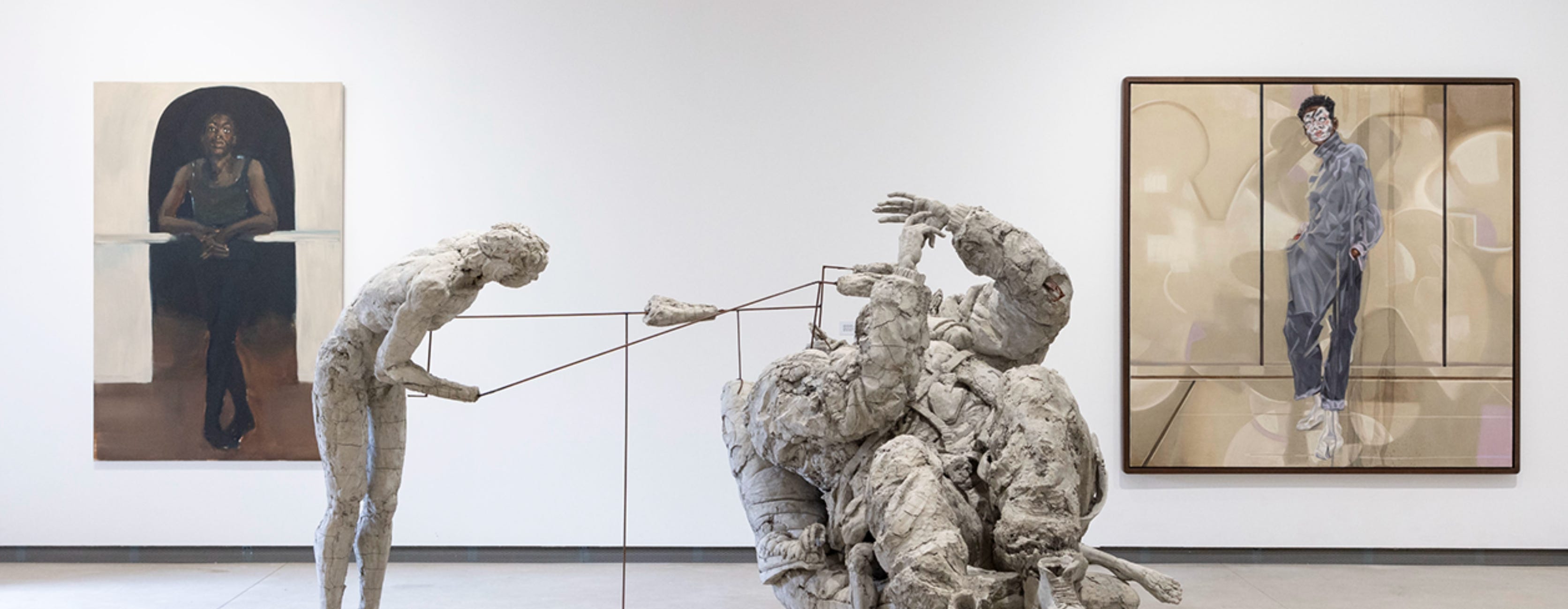
Alia Al-Senussi
Don’t Have Hope, Be Hope! is the title of the inaugural show at the Fondazione Sandretto Re Rebaudengo’s Isola de San Giacomo, and in fact is, to me, the epitome of everything I saw and loved in Venice. There were various moments of poignant reflection and remembrance throughout Koyo Kouoh’s In Minor Keys, and throughout Venice in the Saudi Pavilion’s presentation of Dana Awartani’s May your tears never dry, you who weep over stones, and the Uzbek Pavilion’s group presentation The Aural Sea. I took it all as a call to remember the horrors of man-made destruction and also as a call to action. How can we reject the truths that were put before us in those works of art, of monuments destroyed because of war or because of bad policy, and not think that change is required? The artists and curators provided us beauty so that we couldn’t look away, and so that we learn and work to rebuild. Let’s not lose hope.
Roisin Tapponi
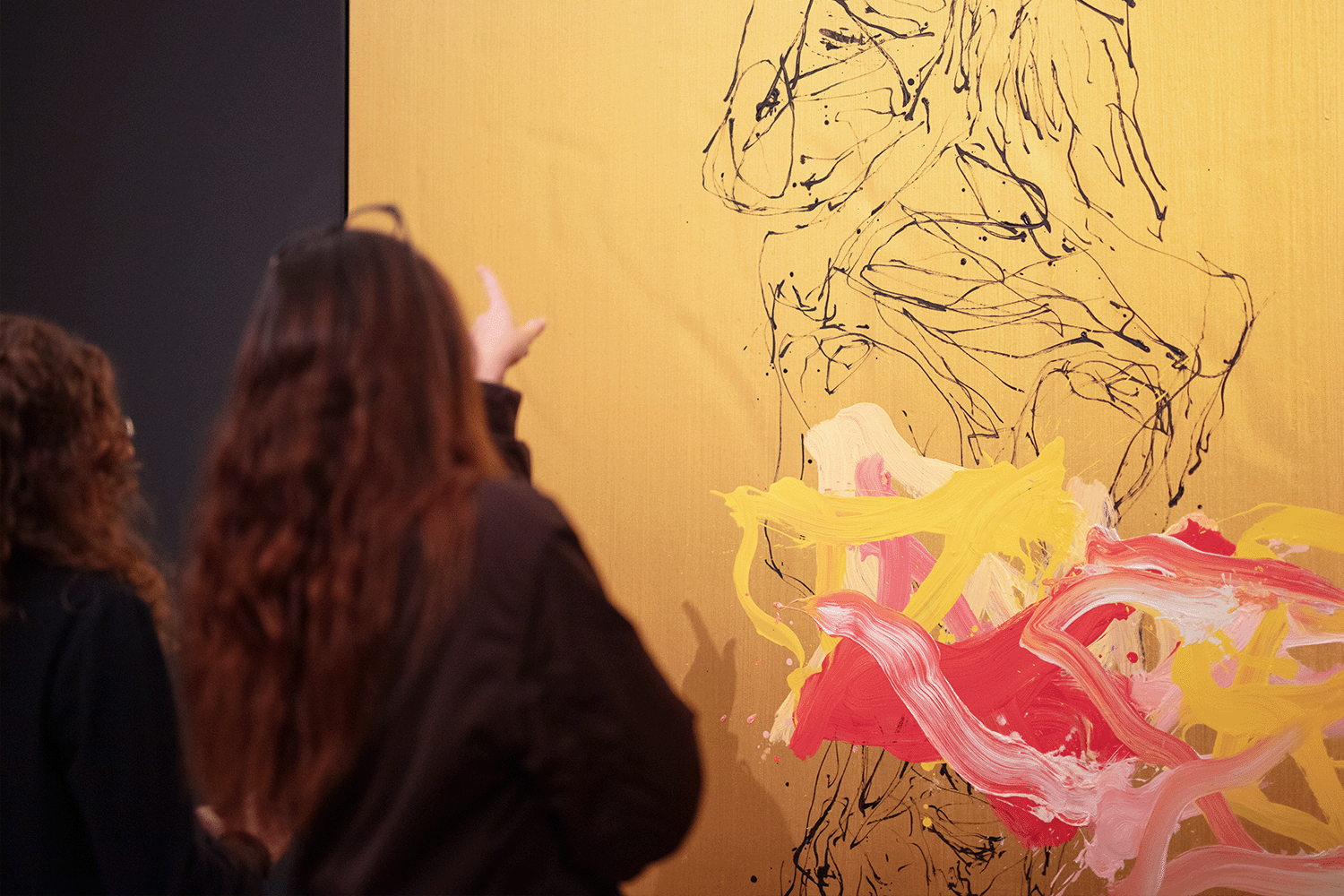
I was extremely moved by Georg Baselitz’s exhibition Eroi d’Oro. It was his swan song; he died a few days before the show opened. Death is the people we leave behind. Every painting is of his wife, Elke, his muse since 1958. Each of the large-scale works depicts her lying vertically in a gold tomb, life leaving her body. The result is iconographic, befitting the exhibition’s religious setting in a former convent at the Fondazione Giorgio Cini on the Isola di San Giorgio Maggiore. Baselitz represents life in the paintings with colorful, de Kooning-esque gestures that swirl outwards from Elke’s stomach. The show’s final work contains no life, no color at all.
Ken Okiishi
When a highly respected museum curator I’ve known for fifteen years congratulated me on “my” Japan Pavilion, I should have just said thank you.[i]
When the “other” is required to become a model minority—as a “positive” inversion of “fear of the other”—the paranoid projections of “replacement,” “destruction,” etc. are flipped into an expectation of magical superhuman abilities, including the ability to be the same person as another in a game of interchangeable categorical being—or, in this extremely bizarre year of 2026, to be able to curate the most difficult and visible exhibition in the world from beyond the grave. (It is indeed extremely odd to say an exhibition can be said to be “by” a curator who died well before an exhibition is realized [i.e. “curated”], such as the official title and introductory wall texts for “In Minor Keys by Koyo Kouoh” suggest. Hannah Black reflected on this precise problem in a beautiful essay about another important large-scale exhibition, Grief and Grievance: Art and Mourning in America, which was originally conceived by Okwui Enwezor and “realized” after he also died relatively young from cancer.)[ii] That these impossible expectations are generated on all sides of the model minority imperative, including by the model humans who are self-idealized to project out perfectly calibrated smiley surfaces beyond any possibility of care of the self, is as tragic as it is deadly.
A flyer from the 2024 Biennale protests that was reused during the 2026 Biennale opening week protests acquires multiple levels of mourning, as the artists in the ghost-curated main exhibition protested the inclusion of “countries whose leaders were facing charges of crimes against humanity by the international criminal court” while carrying the weight (and stress) of mounting an exhibition without their beloved curator and the sudden resignation of their prize jury: No Death in Venice.
[i] In that split second of social and professional horror, I realized I was being addressed as the “first queer Japanese American artist to present a solo exhibition at the Japan Pavilion.” The curator was, of course, thinking of Ei Arakawa-Nash, and the bizarre (but shockingly common) confusion the curator experienced—thinking Ei and I are interchangeable persons—says something significant about how our brains have been trained to think against reality. Ei and I look and sound nothing alike: I am half-Japanese, much taller—and as a fourth generation (Yonsei) Japanese American, I have a completely different and historically alienated relationship to both Japan and the USA (and to Hiroshima, where my grandmother’s family went back-and-forth from for two generations until World War II made life a one-way street). I speak English like a monolingual American educated in New York, and am known for films, media artworks, paintings and writing. Ei, when speaking English, has incredibly charming Japanese-accented linguistic and bodily expressions, and is known for performance art, especially in the country in which they were born, and where their mother tongue will always be from: Japan. They recently became a US citizen and had to revoke their Japanese citizenship in order to do this. As Ei says in the PR material for the Japan Pavilion on being seen as a foreigner in multiple contexts, “I thought I would never have a chance to represent Japan at the Venice Biennale after I gave up my Japanese nationality a few years ago.” And in a recent interview in Art Review: “That legality of national identity actually isn’t what makes me Japanese—through the naturalization process, I became more aware that nationality is a construct. It relates to gay marriage as well, because Japan doesn’t recognise my same-sex married status; it turns out that my status in relation to that depends on which government I’m associated with.”
[ii] See: https://www.theguardian.com/artanddesign/2025/may/14/koyo-kouoh-obituary , https://www.nytimes.com/2026/04/29/arts/design/koyo-kouoh-venice-biennale.html and https://4columns.org/black-hannah/grief-and-grievance