

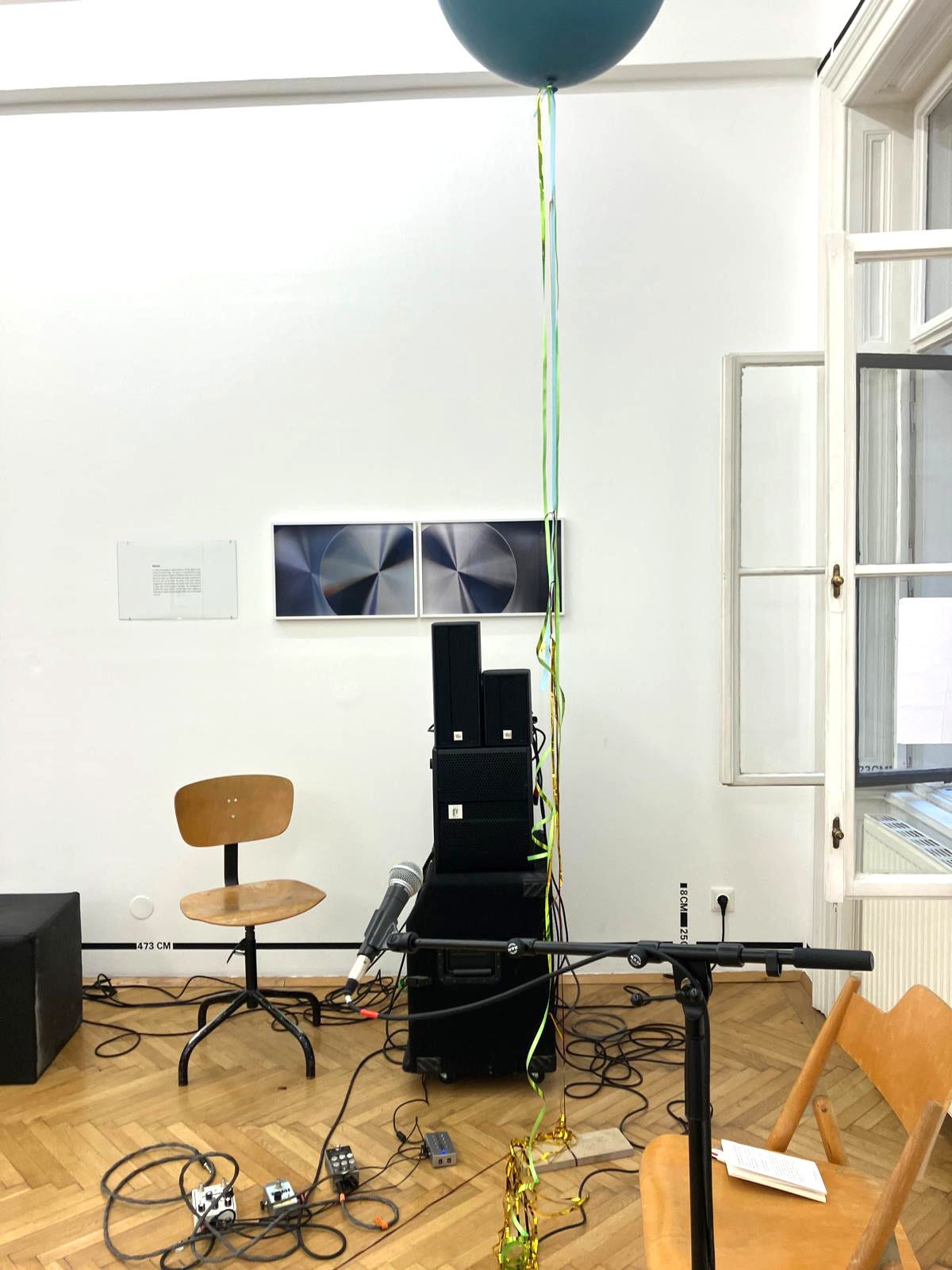
“THESE THINGS THAT YOU DO, that you be you, a poet or whatever, out of love / of being you, here, because you are—that the hateful world only is because of / love, so love is terrible, because love isn’t love, it’s doing what you do. So he tells me.” So Jason Dodge tells me, tells us, in languid cadences, as he reads an epic poem by Alice Notley to an assembled crowd at Felix Gaudlitz gallery in Vienna. Backed by a laconic trio playing guitars, peddles, and loops, the artist-publisher-curator performs a kind of sprechstimme inherited from our American avant forbears à la Robert Ashley. As Dodge recites the poem in a sing-song drone, a series of large helium balloons lassoed to silk ribbons and metallic streamers, and scripted with names in a tribute to artist Rosemary Mayer, bounced and blew softly in front of me, drifting back and forth across the gallery floor.
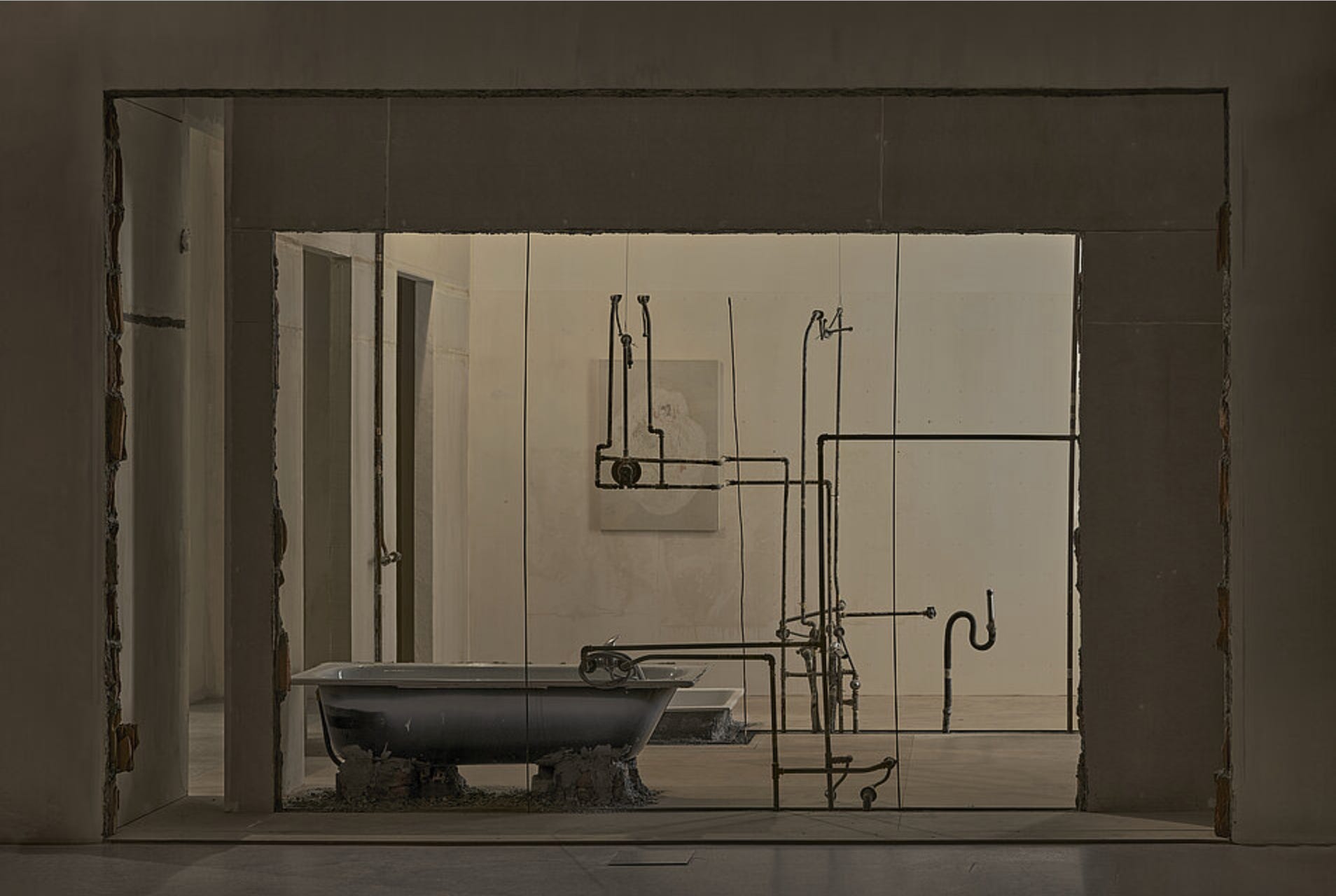
The occasion is the opening of the group exhibition Dodge curated, What can I do now with this great useless machine of my love? It has no wholesome work to do. The title is taken from Welsh artist James Richards, whose poignant work and trade in titles is also on view in Tolia Astakhishvili’s spectacular haunted house of a show, Figure of the Child, at mumok across town, where Richards has invented a series of publications on childhood. I love Notley, love Ashley, love Mayer, love Richards, love a gallery that hosts a poetry reading backed by focused, twitching figures, so I am inclined to love Dodge’s performance and the exhibition’s attentive stagings of other artists’ works—which is perfect because it is part of Curated By, the Vienna art gallery festival, the theme of which is, yes, love.
As I move around the city over the next three days, I see that most of the participants have interpreted the theme as Dodge did: as an ardent invocation of one’s ancestors, influences, and friends. The shows are variously introspective and playful, fully committed and full of wit. The ardor is real, and in these years defined by mass murder and systemic cruelty, the festival reads not as a denial but as intentional (apologies for/to that word) in its gesture toward adoration. Inheritance, reverence, and homage are foregrounded; social connection as method and compass is shown to be the only way we make our way through. Per Edward Said, glossing T. S. Eliot: “No poet, no artist of any art, has his complete meaning alone.”
After his performance, over beers, I tell Dodge about the time Notley read to my students one autumn afternoon in Basel, from her Dante-esque subway epic, The Descent of Alette (1996), a favorite. Dodge offered me stories of their last meeting—she passed away two Mays ago—and then he tucked the Notely book that he’d read from, published by his Fivehundred places imprint, into my bag. Gaudlitz gallerist Hugo Wheeler appeared, and Felix Gaudlitz reached across me to brush something from Wheeler’s hair. “It’s lube,” he shrugged. “Why are you admitting that?” I laughed. “No, no!” he shouted. “It’s from filling up Rosemary Mayer’s balloons. They needed lube.” So they did. I asked about them. Dodge explained that each artist in the show dedicated a balloon to another artist, per Mayer’s original work, including also a specific date, flower, and constellation. Dodge had dedicated a ballon to Anne Truitt (Autumn Crocus, Monocerus), Florence Jung to Lee Lozano (Cassiopea, Violet), Lydia Ourahmane to Giorgio Mastinu (Rose, Aquila), and others.
This devotional mood, slightly surreal in its tributes, seemed to color and scent the festival’s works and days as we moved from gallery to gallery, performance to performance, museum to museum, drinks to dinner to drinks again. At Galerie Martin Janda, Jan Mot curated two slim, affecting shows. The exhibition Her Voice features Chantal Akerman’s via her elliptical autofiction, A Family in Brussels, heard in a sound recording by the artist: “She doesn’t know herself, and she knows other people even less.” I felt that. Nearby, Manon de Boer’s For C. A. (Her Voice) (2020) offered two loops of 16mm film, hung just off a wall, a sideways spotlight aimed at them. Their shadows made an infinity sign on the wall. Chantal forever.
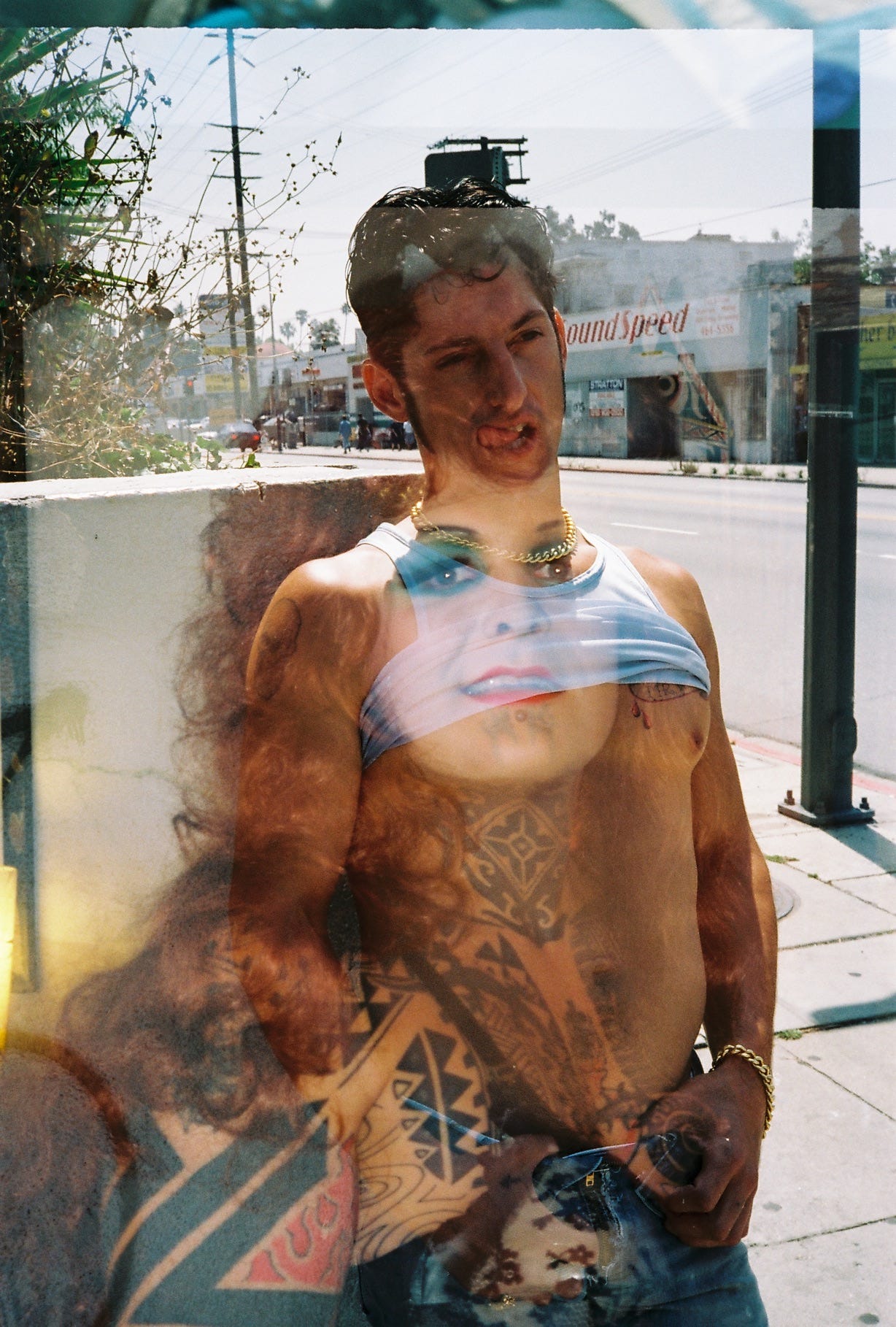
At Krobath, Christian Egger’s group show had a group title. Our love (illusio) is everything that the waterfall is (doxa) at once refers to Eisenvater’s crushing track “Uns’re Liebe,” the waterfall-laden opening of Wittgenstein’s Tractatus, and Bourdieu’s concepts of illusio and doxa. And yet for all these references, the show was simply about love—as fetish, as promise. Most works appeared to cast some Lacanian glance in the mirror. A beguiling corset-like standing sculpture by Jenni Tischer was called Unlike Are We, Unlike (They Call It Love) (2026). Gorgeous double exposures of hustlers by Bruce LaBruce and fragments of human figures by Crisfor, hung near Giorgos Tigkas’s peepshows in stereoscope-like frames made of wood paneling he lifted from the family yacht. The words My Cariño, the boat’s name, appeared on each frame. Every boat is a love letter, no?
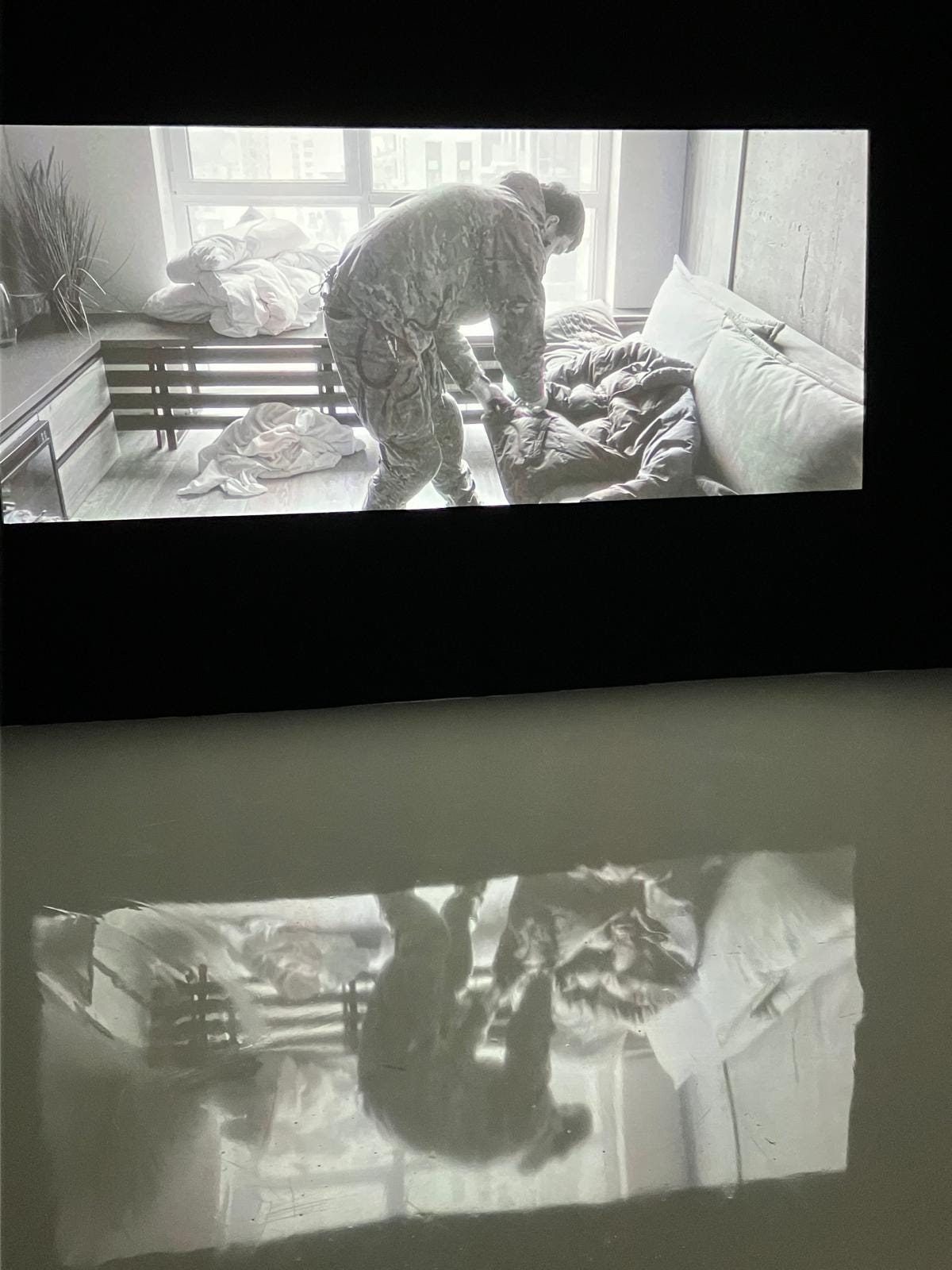
One of my favorite shows took a more sober tack. Additional Scenes, at Gregor Podnar, curated by Katarzyna Różniak-Szabelska, “searches for traces of love within one of the most analytical currents” of the neo-avant-garde, and features film artists including a seventies-era Łódź collective called Workshop of the Film Form (WFF). Their structuralist film experiments eliminate all literary expressiveness—plot, narrative, “realism”—to critique state censorship and show how reality is constructed by the camera. Works play with early surveillance (Malgorzata Potocka’s wonderful Notebook [My Body], 1980/81), or experiment with light and sound (Józef Robakowski’s The Dynamic Rectangle, 1971). The show’s allegorical line to our current conditions was made crystal clear, particularly in its final work, made in 2024 by Yarema Malashchuk and Roman Khimei. Additional Scenes features Pavlo Aldoshyn, a Ukrainian actor who acted in the war drama Sniper (2022) before joining the Ukrainian army. Brought back from the front for three days to play an avatar of himself—as Godard said, every fiction film is also a documentary of its actors—Aldoshyn repeatedly runs and reruns his scenes, breaking the illusion of narrative immersion, bringing levity and sorrow and fear.
Disarmed of its illusory conventions or not, film, at its best, is a form of commitment, relation, and critique. The beautiful films in curator Chus Martinez’s show at Galerie Krinzinger, My Whole Being Is a Dark Verse, embraced narrative expressiveness wholeheartedly. Alexa Karolinski and Ingo Niermann’s Oceano de Amor (2019) performs physical touch and care in post-revolutionary Cuba. Maryam Tafakory’s collage of post-revolutionary Iranian cinema, Nazarbazi (2021), or “a play of glances,” narrates desire in a film industry where scenes of intimacy between the sexes are forbidden, revealing how those acts play out optically, more via the gaze than by touch. But nazarbazi also refers to a mystical Sufi practice, à la Rumi and Hafez. Evocative fragments of dialogue and poetry accompany the found scenes, touching a nerve: “And all my wounds come from love, from loving.” The films were accompanied by an exacting, heartrending series of epistolary works on paper and prison letters by Sofia Karim from the American carceral capital, California. As such, all the films and works on view expertly delineated how intimacy is craved and crafted in spaces and states of oppression.
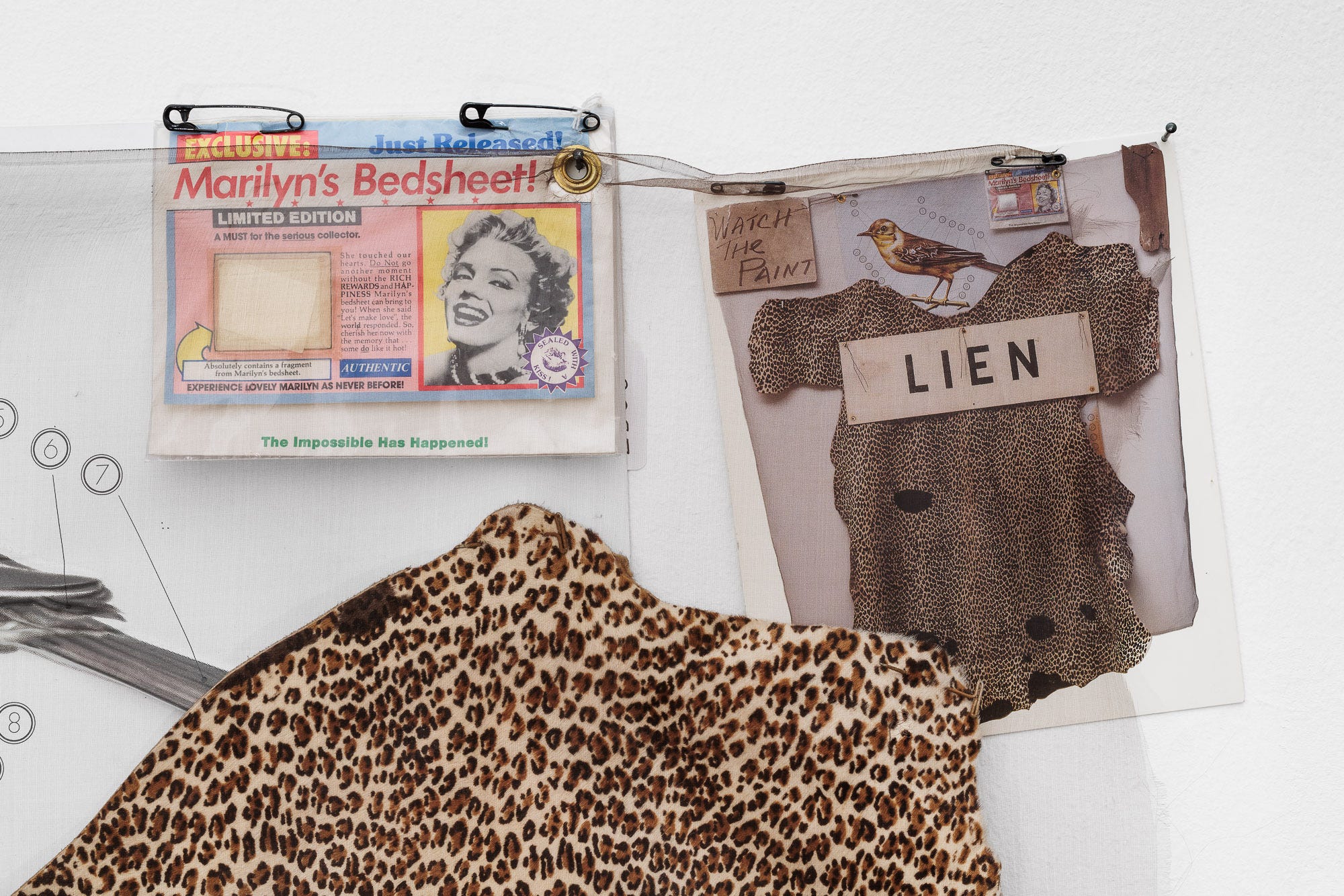
Thus went the days of art and ardor in Vienna, met by committed nights of drinks at gallery bars, dinners at taverns, and parties in unstable parking garages. On my last afternoon there, I went to Croy Nielsen, where Milan Ther curated an affecting show of shroud-like assemblages and talisman-like objects by the brilliant Jewish-Swedish artist and poet Lenke Rothman. Born in Hungary, Rothman spent the Second World War in various concentration camps, where her entire family was killed except for one of her brothers. At Croy Nielsen, Rothman’s son talked with Ther about his mother’s life and practice, describing her lifelong magpie method of collecting scraps, an ethical-aesthetic operation of reuse and repair. As he spoke, I recalled a text written by Rothman about her use of plastic:
The plastic bag—plastic, this suffocating material—is filled with our screams, our terror, our questions. One day I discovered that this very material was capable of describing life, faces, and conditions. I tied commonplace objects for eyes and mouths into the bags, also in cloth and gauze, trying in this way to make faces that could be seen. They immediately seemed to reproach me for not having created them long before. It is especially in instances such as this—when you see how everything you touch pleads to be allowed to live—that all killing seems a macabre and unreal invention. “You have to kill” a painter from Morocco told me many years ago when he saw me struggle to remove a color or form that I had created. I think one of the reasons for my frantic search using new forms and new materials is precisely this: to arrive at a place where killing can find rest.
Yes.
I thought back to a conversation I had had over dinner one night—either at Salzamt, or at a leafy wine tavern in the northern outskirts of the city. As wine was being poured, a friend told me that after two days of curatorial love letters and shows thematizing the feeling, she was exhausted. “No more love!” she said. I laughed. I understood her sentiment—and yet I wondered why I had not tired of it. Perhaps it was because the love offered here was less romantic than relational. Closer to the lens of, the act of, relation—that wildly overused yet vital word—with all its tender, tenuous connections and enormous demands. And how the social world and solidarity that comes with it, might come into view, come into being. I have grown tired of the opposite of love, its brutal evidence, destructive practices, and cruel images falling around us. I’ll take love, I thought. I really will.
Quinn Latimer is a writer and editor. Her most recent book is Like a Woman: Essays, Readings, Poems (Sternberg Press, 2017). She is a lecturer at Institut Kunst in Basel.