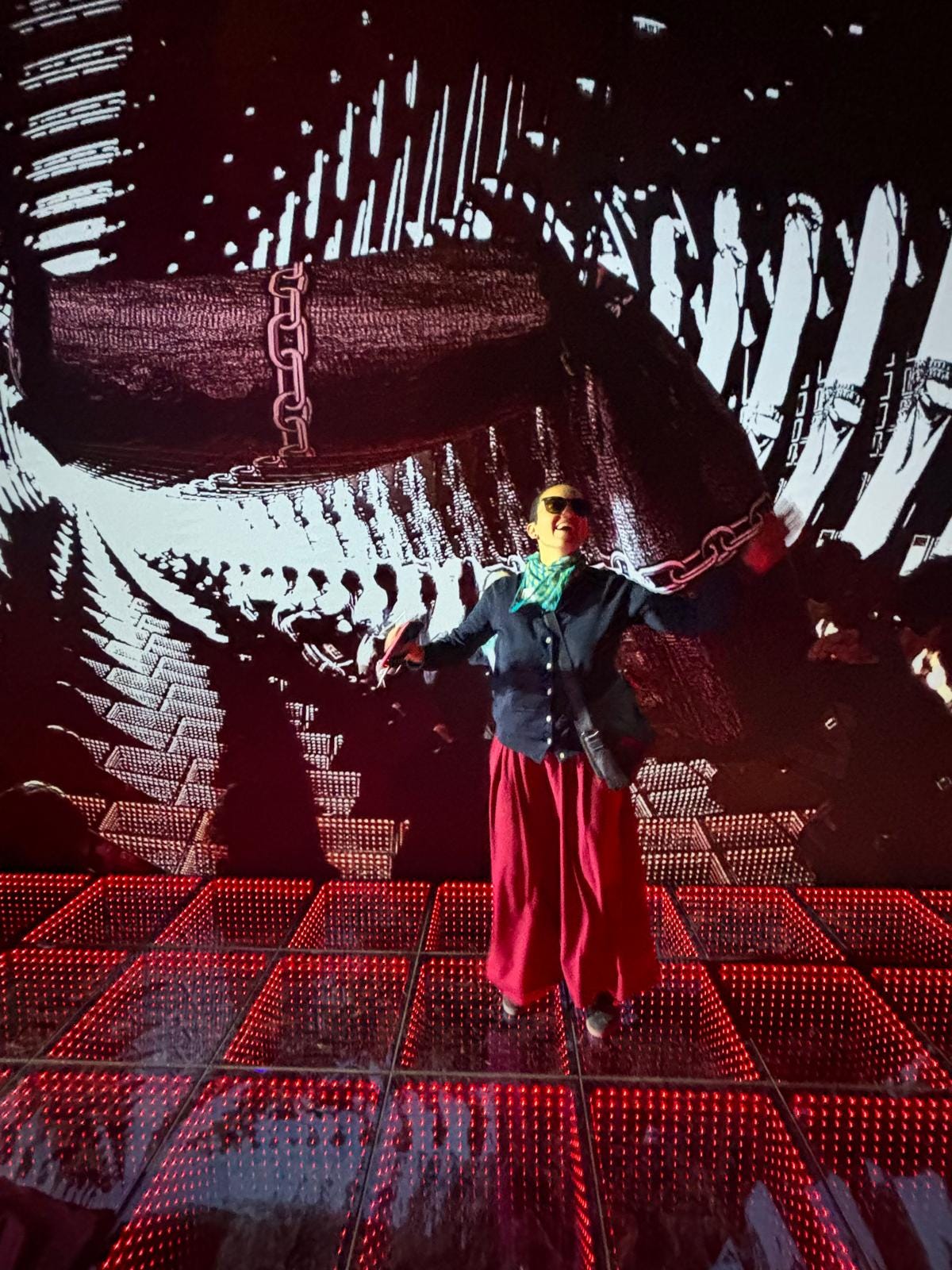
Lina Attalah is the instigator and editor-in-chief of Mada Masr, by all accounts (including Bidoun’s) the leading publication in Egypt today. Lina and Mada have been in the news in recent weeks as various unironically named arms of the Egyptian security state—the Supreme Council for Media Regulation and the Supreme State Security Prosecution—have taken steps to shutter the publication and imprison its editor. For invaluable context on the predicament of independent media and unsanctioned speech in Egypt today, we recommend “Art, Journalism, and Mada Masr,” a recent essay in e-flux Notes by Sarah Rifky.
Sarah is, among other things, the curator of Zamaniyyat, a project on the infrastructure of Middle Eastern modernism for Art Dubai; a sometime contributor to Bidoun; and a longtime friend (and occasional doppelgänger) of Lina’s. We invited Sarah to write about the current crisis from a more personal angle, and the result is “Lafufu et al: The Education of Lina Attalah,” an essay on friendship that is also a profile in courage and a love letter to solidarity. “But why Lafufu,” you may ask? Read to the end.
— The Editors
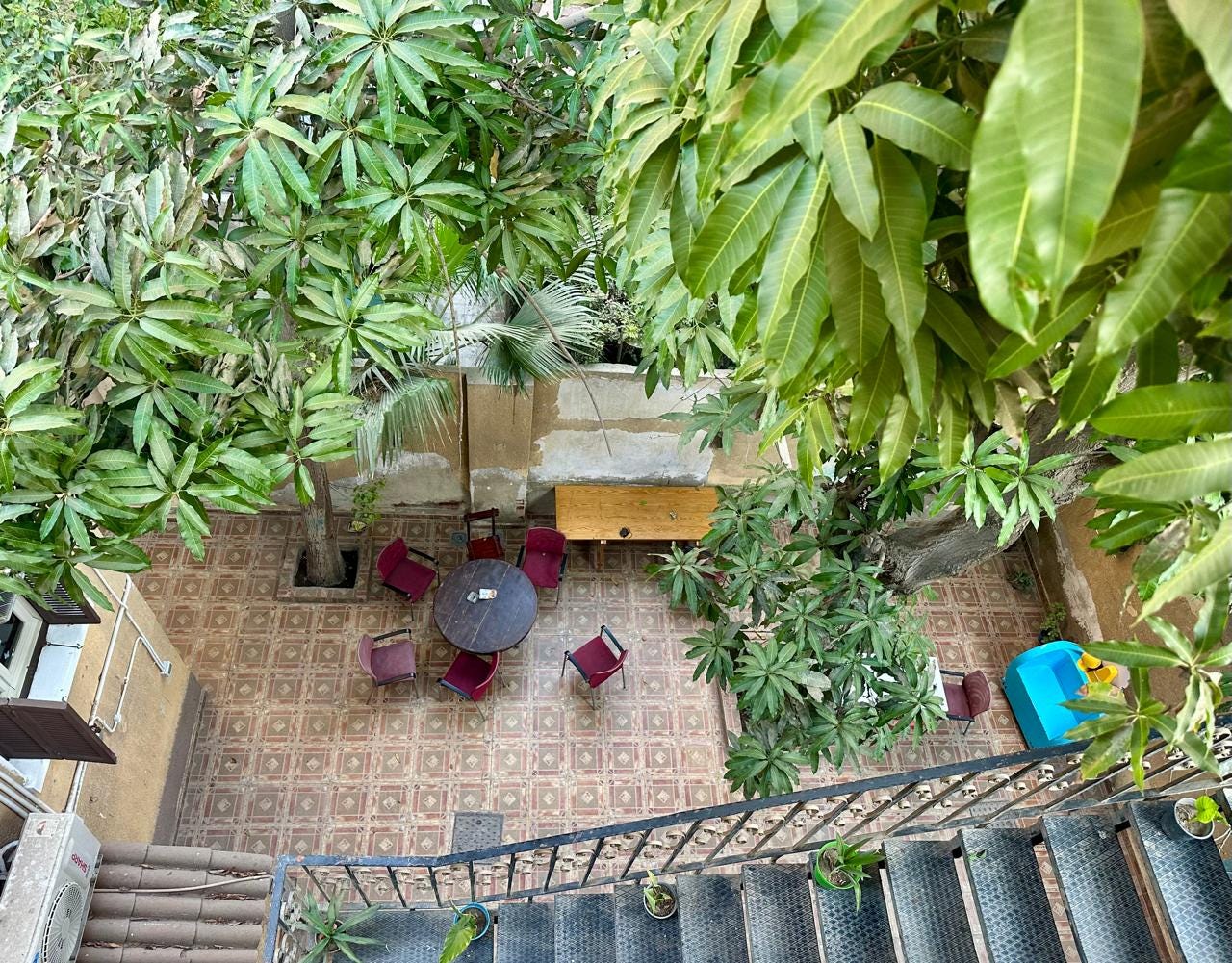
Last year, or perhaps the year before, Mada Masr moved its premises to the same villa in Agouza where I ran an art space called Beirut in the 2010s. These days, I often drop by Mada for the screenings, breakfasts, and poetry readings they host on the rooftop. The garden that surrounds the house is much better tended than when we were there; the ancient mango tree is thriving. At one breakfast, milling among people mostly of our generation, I noticed a clutch of young people who looked fresh out of high school. Lina explained that several of them had just graduated from the Canadian branch of the school she’d attended in Italy a quarter century ago. One young man was introducing himself with great earnestness, and my ear caught on a sentence he delivered matter-of-factly, in the manner of someone certain of being understood: “My parents are fascists, you know.” I doubt this was true in any rigorous sense of the word, but what registered was the way Lina appeared to him and others of his generation as an otherworldly, perhaps secularly saintly, mentor. Their crush was open and total; Lina moved through that crowd like Björk in her swan dress era, beckoning us toward the ful and the falafel. At a certain point, she handed me a knife, and I sounded my Owala like a gong to bring the attendees to attention.
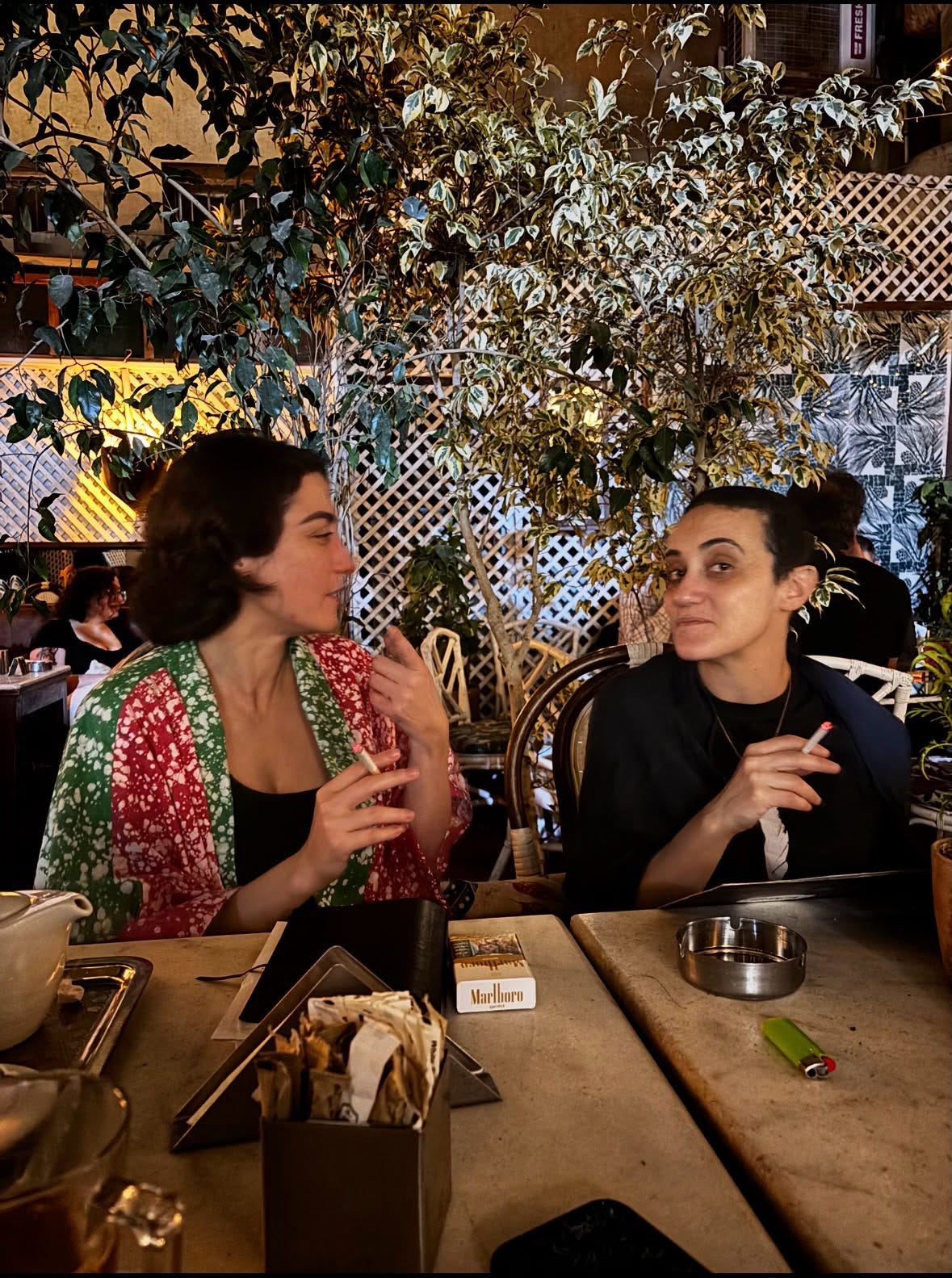
The United World Colleges movement descends from Kurt Hahn, a German educator who envisaged a school that would gather teenagers from both sides of the Cold War on the premise that shared work and shared service can produce a loyalty no border can divide. Lina’s school, the United World College of the Adriatic, opened in 1982 in Duino, near Trieste, the city where Churchill placed the southern anchor of the Iron Curtain, close to the border between Italy and a Yugoslavia that would begin to break apart a decade later. Lina arrived there in 1998 from the Collège du Sacré-Coeur in Heliopolis and left two years later with an International Baccalaureate, which is to say that her adolescence unfolded on a coast, in an institution devoted to training young people to serve as emissaries of a friendship meant to surpass the nation-state as the horizon of belonging. (Her class motto was “I am lost and I intend to stay this way forever.”) When the young man told Lina about his parents, he was confiding in someone who has spent decades bearing her convictions, daily and at real cost, in a country that treats every one of them as a threat. Someone who believes in a world greater than the state that claims you.
I first glimpsed that education at work in a room in the Social Science building on the old campus of the American University in Cairo, packed with students past any sensible capacity. It was the early 2000s. Lina was at the front of the room, alongside Laila Soliman, the playwright and director, and Alia Mossallam, the historian of song and oral memory, speaking about a new summer program that would take Egyptian students to Palestinian refugee camps in Lebanon. I remember standing at the door, unsure, like someone not ready to receive an initiation, and I remained on that threshold even as the room echoed with a language of urgency around Palestine that I had yet to learn. Those who crossed it went to Lebanon, where they ran art workshops for children and sat for hours with the older residents, absorbing a history that is, as Lina would say, our inheritance as Arabs and our lodestar. The program was called Cairo to Camps; that first year, one group of students lived in an apartment in Shatila, where they numbered a cockroach named Francesco among their roommates, inspired as they were to find ways of living among the unwanted. Lina still counts those summers as the beginning of her political consciousness, an embodied practice of living for more than oneself, and her experience in Palestine runs through everything since.
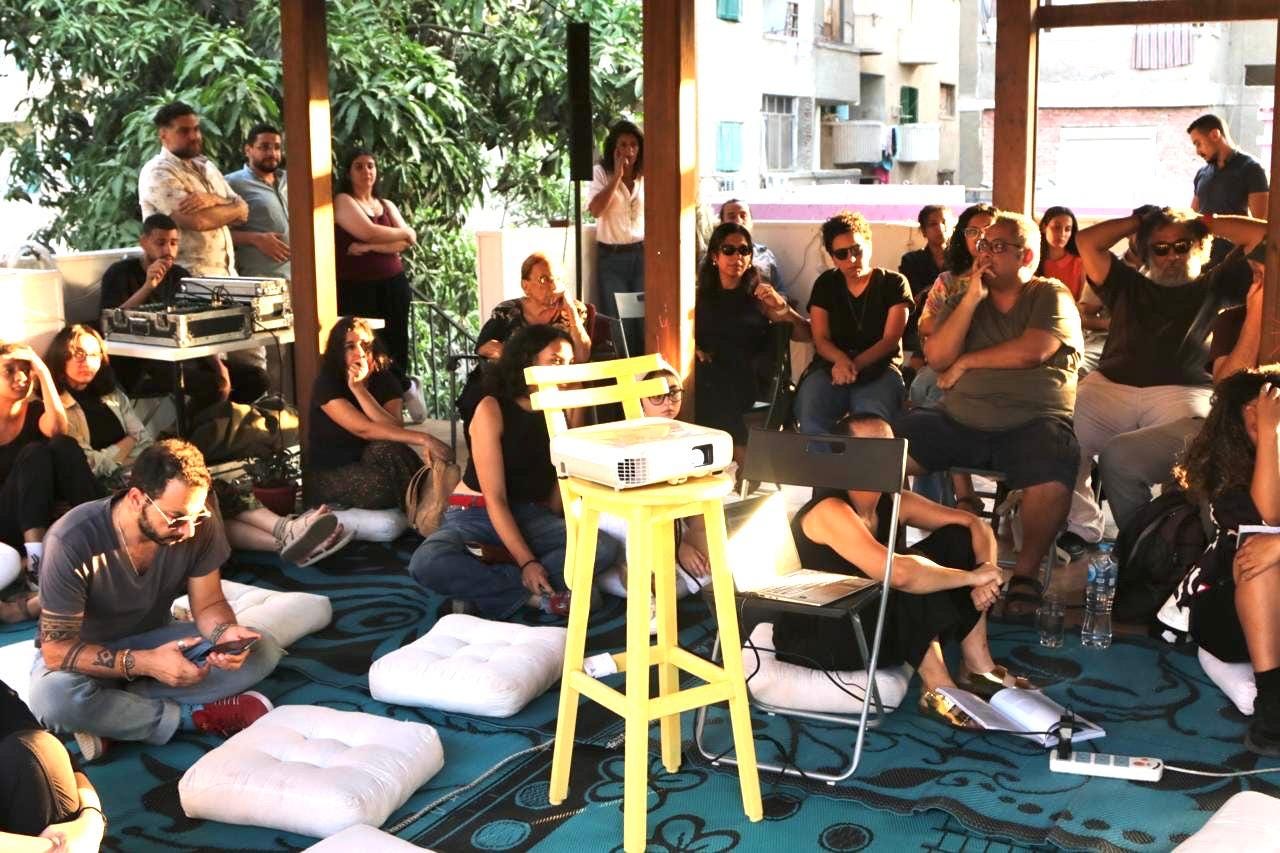
Pedagogy has been the medium of her work for many years, and our own friendship has evolved in close relation to it. During Beirut’s final year of public programming, we suspended exhibitions in favor of a project we called the Imaginary School Program, stewarded by curator Antonia Alampi, which gathered artists, researchers, and scholars to teach an eight-month class on alternative institution-building. In 2018 Lina co-founded the Counter-Academy for Arab Journalism, a school that draws journalism into conversation with social sciences, research methodologies, and critical theory. During a recent round of filtering applications, she complained that so many of them opened with the same word in Arabic, لطالما (li-ṭālamā), the classical expression meaning “for a long time,” “always,” and “time and again.” Her frustration gestures toward the malaise of journalists polishing their prose through large language models, and the more I reflect on it, the more their unison strikes me as a comment on this time more generally—an age in which every beginning arrives already worn by repetition, as though a whole generation were writing from inside a sentence that started long before them.
• • •
Her own apprenticeship in the trade began while she was still an undergraduate, as a reporter at the Cairo Times, an English-language weekly. She went on to edit the English version of the website of the daily Arabic newspaper Al Masry Al Youm, which later evolved into the Egypt Independent. Mada Masr emerged when the Independent’s independence was abruptly curtailed and Lina proposed that the staff establish a new paper as a collective, with a profit-sharing model in which everyone held an equal stake. The proposal carried its utopian charge, but it also ran up against the legal reality of running an institution like Mada in Egypt, where responsibility can never be distributed equally. Lina is Mada’s mascot and also the holder of its primary liability; as the sole signatory of the organization, it is she who is summoned whenever something goes awry with state security. It is a collective, in other words, whose paper trail bears a single name.
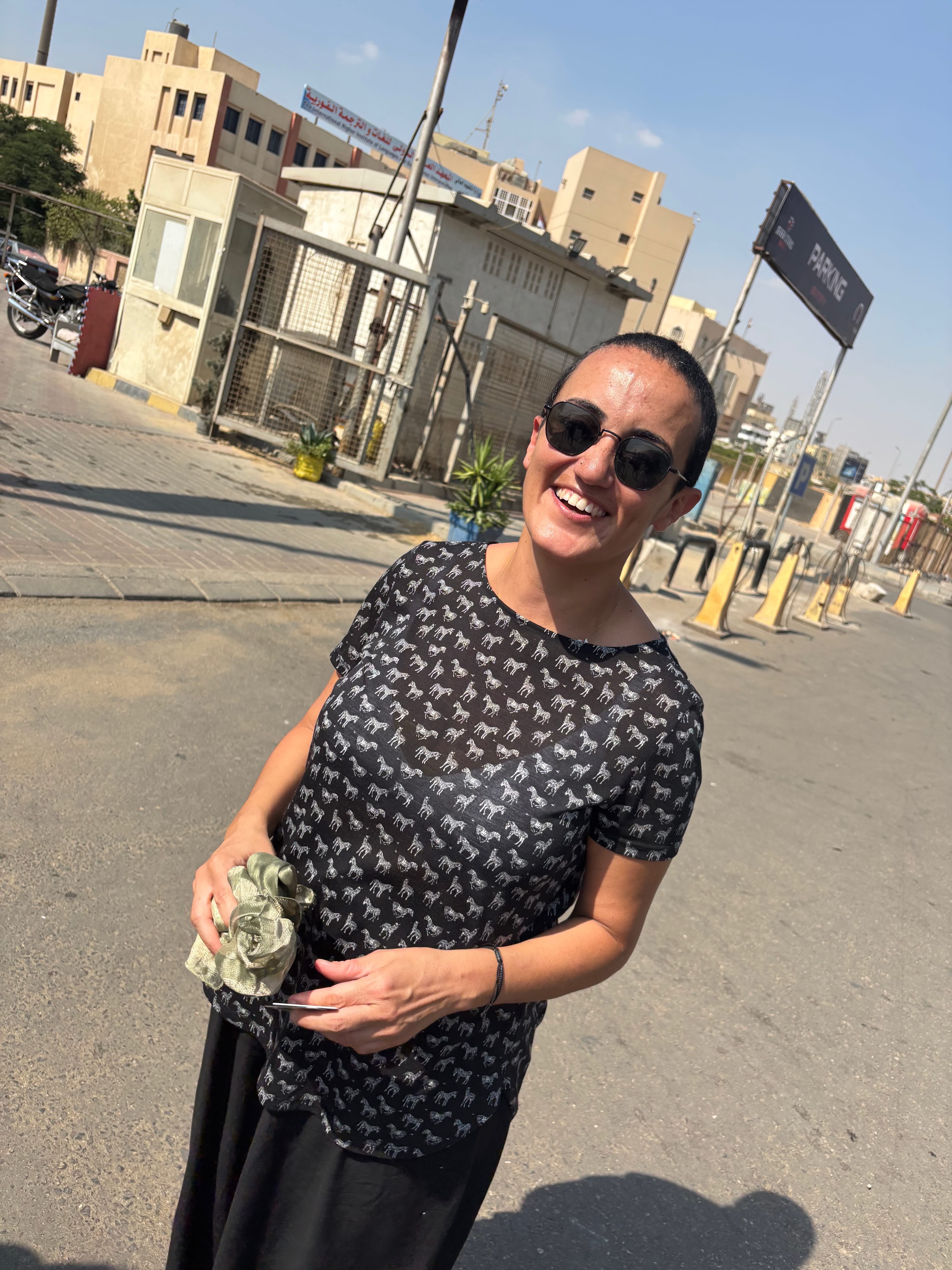
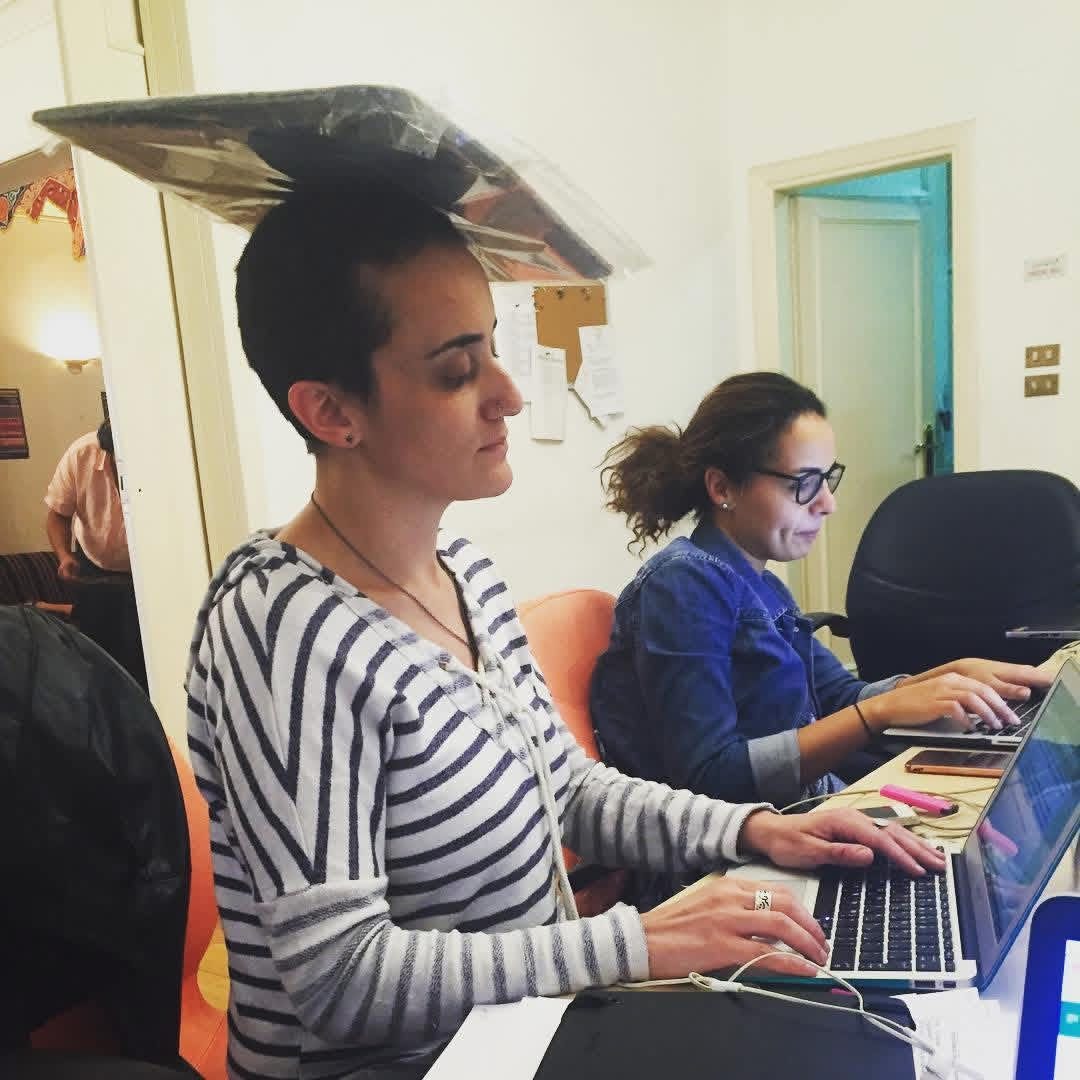
Lina’s appearance is strikingly punk. She is known for her iconic buzzcut, and she can be an intimidating presence, if only because she generates perplexity. At the checkpoint in Taba while driving to Sinai for the holidays, a flummoxed officer found it impossible to decide how to address her and spoke to her indirectly, through the only man in the car. Mada Masr induces a similar perplexity in the public mind. I have heard misinformation from both ends of the political spectrum, including the notion that she must be a dual citizen, since anyone willing to take on this kind of risk must surely be foreign. It often falls to me to dispel that myth: Lina is Egyptian and holds no other nationality. Her approach to Mada is born of stubbornness and an admittedly rare commitment to virtue. Someone I spoke to recently was convinced that the paper must be Muslim Brotherhood, which mostly just confirms that they have never read it. This is a somewhat understandable situation, given that its website has been blocked in Egypt since 2017. Enterprising readers have had to find their way to Mada through a succession of obliquely-named mirror sites, dozens of them. My favorite was illi fi bali balak (What’s on my mind is on yours).
The state’s campaign against Mada—against independent media, tout court—has proceeded in fits and starts, with all the bureaucratic opacity and sometime inanity that is the stuff of Egyptian literature. The summonses have a rhythm of their own. In 2019, plainclothes officers raided Mada’s office, holding Lina and two colleagues incommunicado for several hours and confiscating phones and laptops. In 2020, she was arrested while interviewing Laila Soueif outside Tora Prison, where Soueif’s son, the activist and writer Alaa Abd El-Fattah, was imprisoned; the police accused her of filming a restricted facility. In 2022, prosecutors questioned Lina and three colleagues over charges of false news and disturbing the public order. 2024 and 2025 saw similar incidents.
We became aware of the current crisis a few weeks ago, on October 19, when Lina received a summons to appear before the Supreme State Security Prosecution, with no reasons given, on the same day that Sisi spoke at the Egypt Forum. On October 21, she was interrogated for more than six hours about Mada’s coverage of protests inside Egyptian prisons and about the status of its license to publish online; the following day, she learned that she would be referred to trial THE 27TH!. This was not a new issue. Mada has been applying for a publishing license ever since they became mandatory in 2018; employing what might be called strategic ambiguity, the Supreme Council for Media Regulation simply refused to respond, leaving Mada in a state of suspended precarity. One of the most alarming developments was the discovery that Mada’s most recent application, from late 2023, had in fact been rejected, but that no one had been notified. The notification, such as it was, came when it was discovered that Lina, as Mada’s legal proprietor, had not only been charged with operating a media outlet without a license; she’d been tried in absentia and sentenced to twelve months in prison.
We became aware of the current crisis a few weeks ago, on October 19, when Lina received a summons to appear before the Supreme State Security Prosecution, with no reasons given. On October 21, she was interrogated for more than six hours about Mada’s coverage of protests inside Egyptian prisons and about the status of its license to publish online. The next day, she was informed that her case would go to trial the following week.
As it happens, Mada has been trying to apply for a publishing license since 2018, when it first became mandatory to have one. The issue lies with the authorities, specifically the Supreme Council for Media Regulation (SCMR), which has pointedly refused to respond, leaving Mada in a state of suspended precarity. In 2020, they applied again; in 2022, they discovered that Mada’s application had, in fact, been declined when a prosecutor produced the SCMR’s rejection letter during an interrogation. Mada reapplied in 2023. In 2024, Lina was called to the prosecutor’s office and charged with two crimes: operating a website without a license and publishing “false news.”
In the rushed and highly irregular trial three weeks ago, on October 27, Lina was convicted of illegal web-siting and given the maximum penalty: the closure of Mada Masr, the confiscation of its property, and a fine of 3 million Egyptian pounds. Upon release, she was officially informed that her 2024 charges had actually gone to trial at the time, without her knowledge, and that she had been convicted in absentia and sentenced to a fine of 2 million pounds plus twelve months in prison.
The situation is fluid. It is also stupid.
Both of these convictions are being appealed, of course.
• • •
“How are you doing?” I asked her recently. We were sitting at the Heliopolis Orthodox Club, the cozy, family-friendly club in the neighborhood where she grew up. I was conscious of the shadow of uncertainty, since it is difficult to go about having a “normal” day when the suspension of the ordinary is possible on any given one. “I’m still editing,” she told me. “The staff are anxious and there are lots of culture pieces piling up on my desk, so I figured, why not? We’ll have a backlog...” Mada is closed by court order, but for Lina the work of making the paper simply goes on. She is giving a lot of interviews, though. “It’s boring to have to focus so much on oneself,” she says. But she admits that she loved going live on Democracy Now! with Amy Goodman, on whom she has a professional crush. “Amy’s dog Zazu made an appearance,” she laughed. “She said she expressed solidarity with me.”
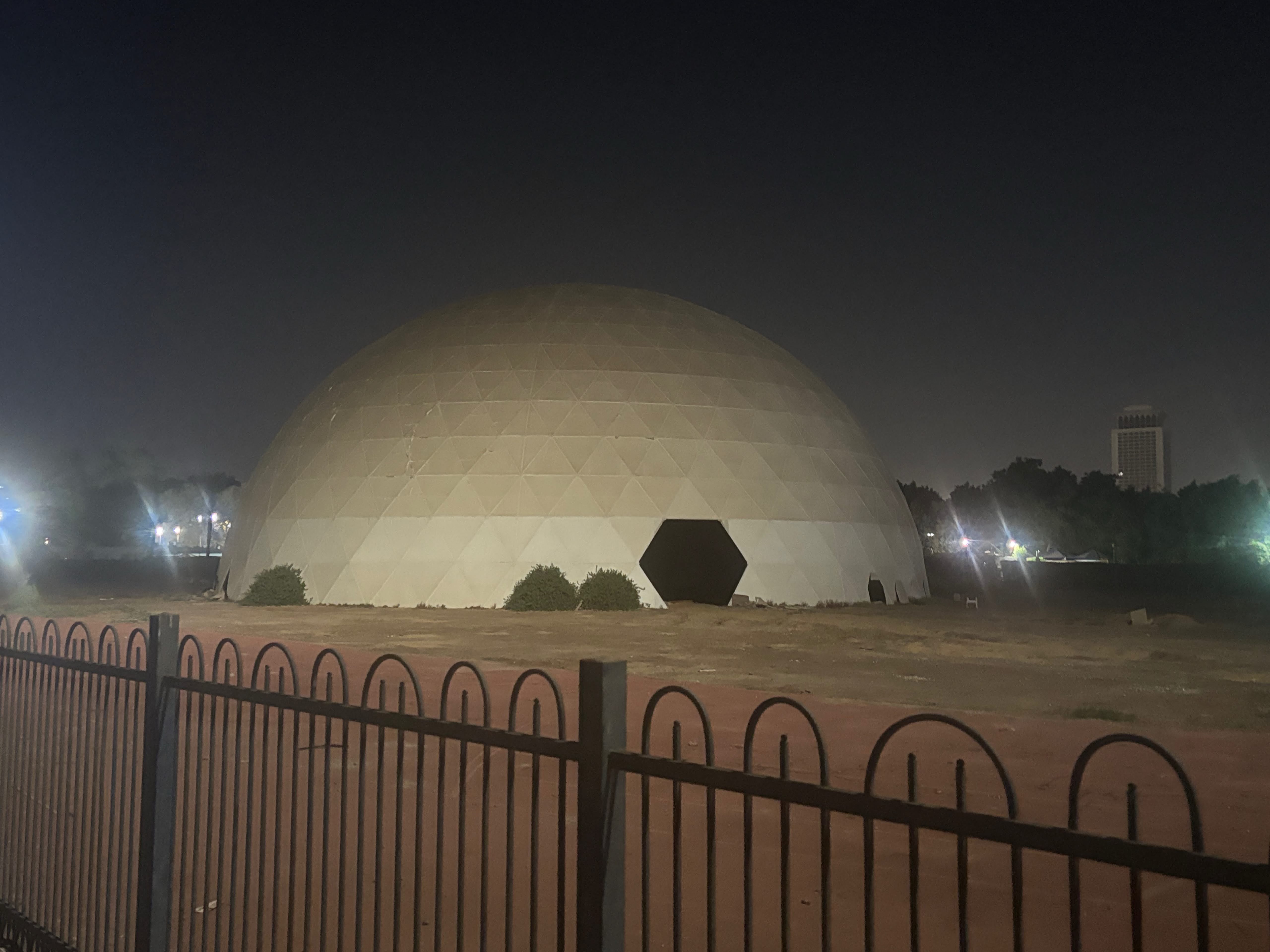
In her mannerisms Lina is something of a surrealist, and one of her superpowers is her appreciation of the absurd, which she expresses with a magical, almost mystical touch. One evening last month, a group of us met at the Gezira Club to walk its long dirt track together. The loop runs on so long that it never feels circular. In the distance, the Cairo Tower commandeered the horizon with its manic, kitschy lights; close by, an enormous empty geodesic dome gleamed in the dark like a half-remembered future. Lina turned up in a sweater designed by her cousin, the print artist Yasmine Louis, which read “Demain peut-être,” and we laughed; the next day the first of the new summonses arrived, which Mada announced to the world in a post titled “Tomorrow, Maybe.” This is not unusual. A current of intention runs through her life and work, a steady traffic of coded messages between the everyday and the newsroom.
Lina’s sensibility and style lean toward the playful. At the Egypt Independent, when the parent company Al-Masry Al-Youm objected to a colleague’s shorts and flip-flops, Lina declared a newsroom-wide shorts day. That spirit has followed her into the courtroom. Before every hearing, we perform a little ritual in which we discuss what Lina might wear. Perhaps the shirt with the little turtles? That was a T-shirt with a blue and yellow turtle that Reem Almasri made for her. Lina gave her assent, to which another friend responded, “Blue and yellow for the rest of us, then.” This small anti-anxiety exercise has taken root. Two hearings ago, I suggested that whenever she felt stressed, Lina should “think Kyoto.” At the last hearing we all wore something green.
Near the end of 2024, as we were deciding how to observe the new year—undecided between beach and desert but certain we needed an escape—Lina, with no preamble, announced, “How about we go to Damascus?” It was not a question. In January 2025, just a few weeks after the fall of Assad’s regime, we crossed into Syria from Lebanon. In the Umayyad Mosque, where Damascenes were holding Friday prayers for the first time in a dozen years, we sat beside what is said to be the resting place of the head of John the Baptist, the disciple Lina loves above all the others for the beauty of his soul.
We ended up at Yarmouk, the former Palestinian refugee camp devastated during the war. On an artists’ residency in 2008, I’d photographed walls painted with hearts. This time, just inside the gate, a whitewashed wall pocked with bullet holes sported a broken heart, painted in red, alongside beside the emblem of the Bisan Scout and Guide Group, a girl scout troop whose name recalls Bisan, a Palestinian town that was emptied of its people in 1948.
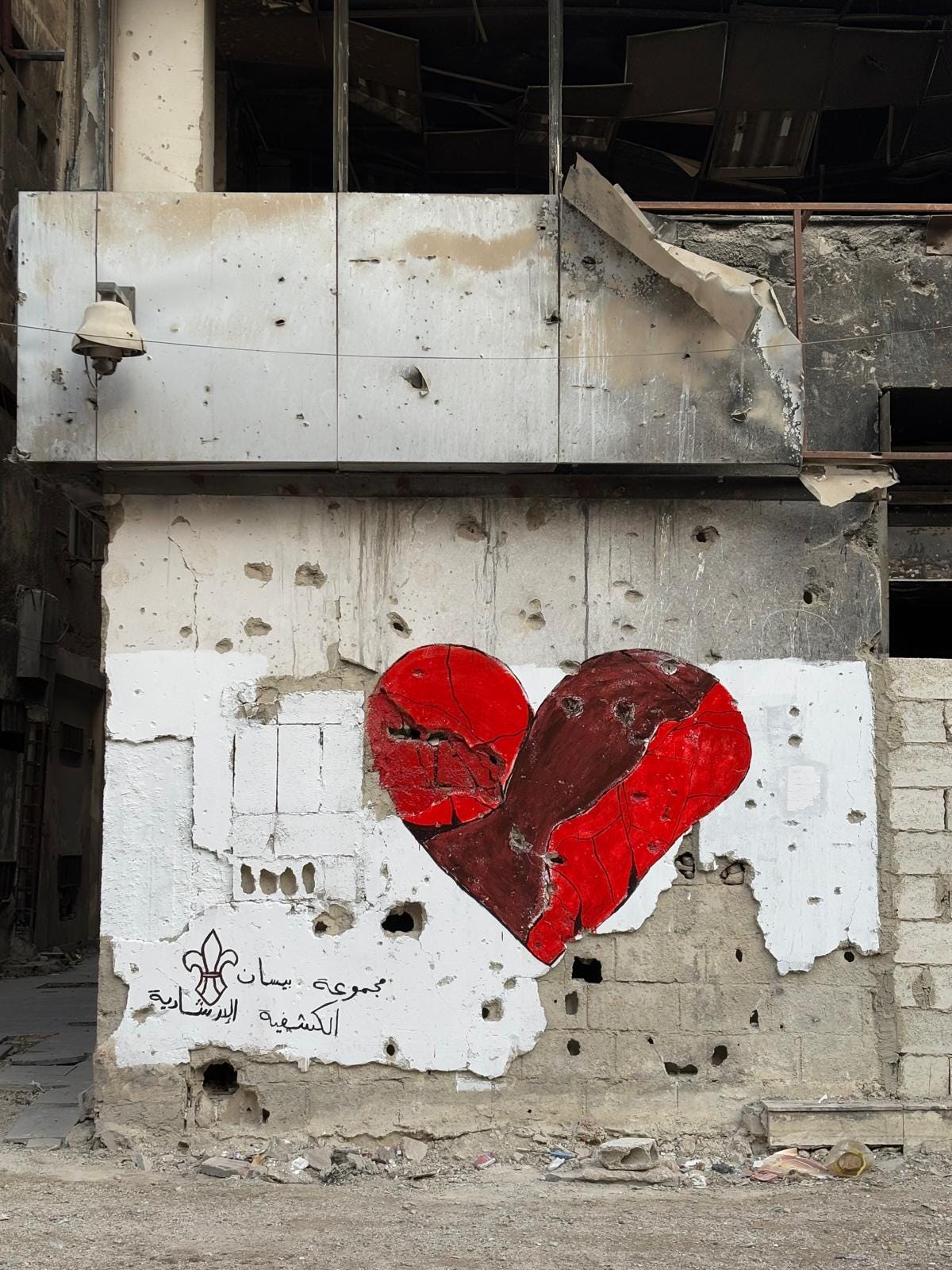
Beyond the wall the camp opened into a ruin from the future, streets of dun rubble under a listless sky, hollowed buildings and mounds of debris answered here and there by murals: a red eye behind a lattice of diamonds, a figure trailing a blue shadow. We said goodbye to Damascus from Mount Qasioun, enjoying roasted corn and sahleb, remembering the rebels who sat outside the palace gates smoking shisha instead of storming them. Lina called that another glimpse of the ordinary, a glorious non-event, and mused that such moments are what we most need amid all the exceptional circumstances we find ourselves in.
• • •
Although I have known her for over two decades, there are still entire chapters of Lina’s life that remain largely unknown to me. For example, the period in 2005 when she went to live in Nyala, a city in South Darfur, Sudan, to produce a daily half-hour radio program called Salam li Darfur (Peace to Darfur). A project of the BBC World Service Trust, the show provided essential news for people who had been driven from their homes by the government-backed Janjaweed militias. Another example: her 2011 voyage aboard the Tahrir, a Canadian boat bound for Gaza as part of the Freedom Waves flotilla. The Tahrir sailed from the Turkish port of Fethiye, only to be intercepted by Israel at gunpoint in international waters. Lina was interrogated in Ashdod and returned to Egypt through Taba. When her parents saw their daughter’s name in the news, the report seemed so outrageous that her father refused to believe it, assuming it must be another Lina Attalah, and went to bed. Whenever Lina recollects that abortive journey, she delights in telling us, amid helpless giggling, how their boat was bombarded with soapy water, sending everyone sliding in all directions.
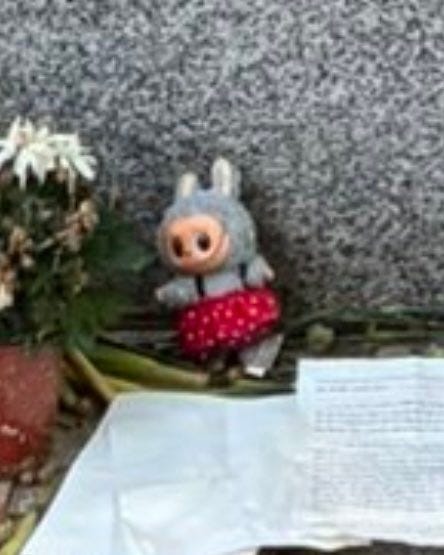
Despite the weight of the current moment—the charge she is facing carries a one-year prison sentence—I should divulge that we share a collective chat titled “Lafufu et al.” Around the time this latest attack on Mada began, Lina shared a photograph of Karl Marx’s grave upon which someone had placed a grey Labubu (or was it Lafufu?) in a red-and-white Minnie Mouse polkadot skirt, providing us with our leitmotif in the days ahead.
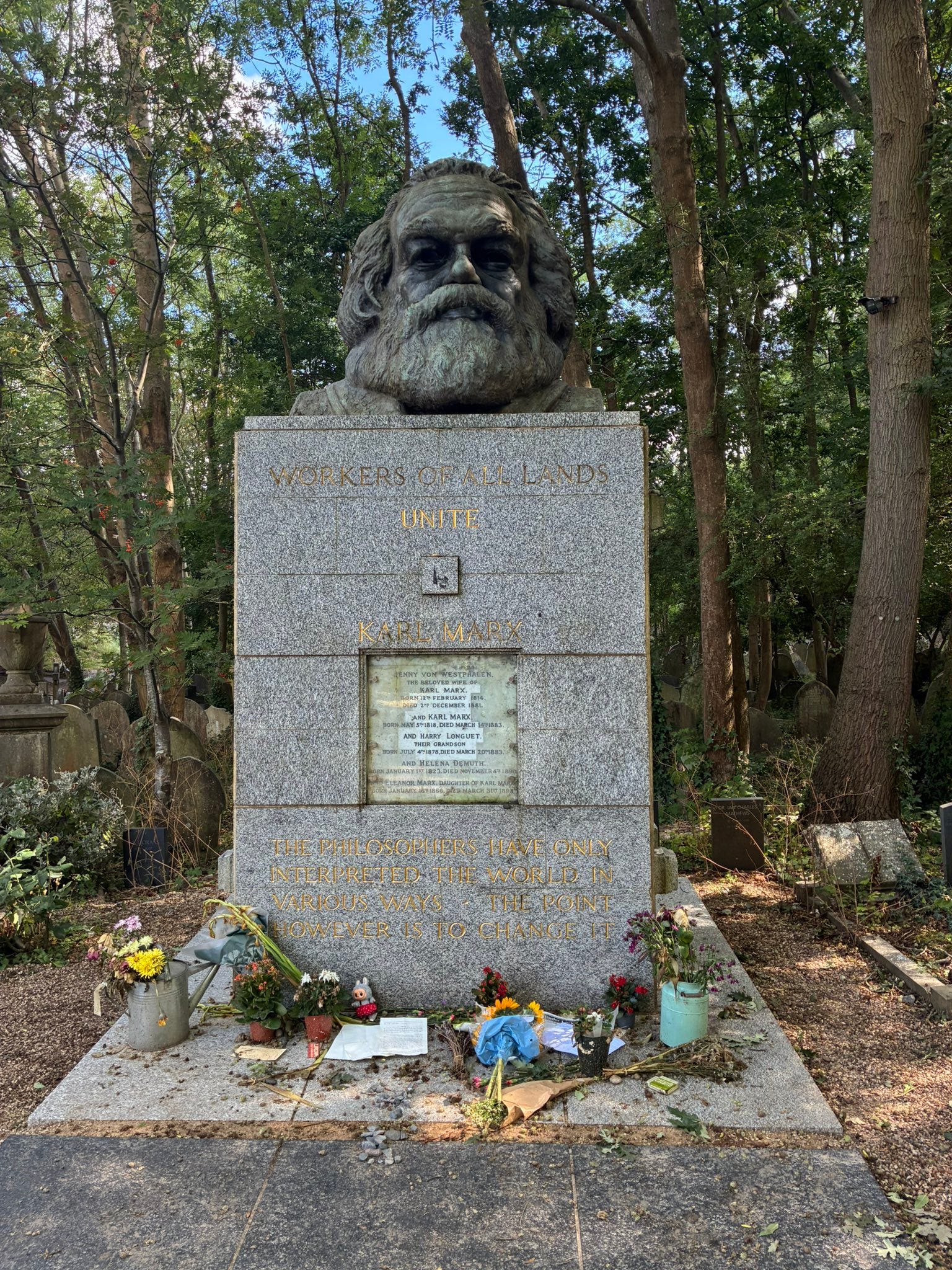
The other night, Lina was musing about how large the chat group has become, with so many serious people following updates via “Lafufu et al.” Was it no longer appropriate to discuss what we were going to wear for her next court appearance?
The code is something we invented together, and it resists any one reading. On November 11, we wore black, white, and green, while Lina wore gold shoes. For me, green is omen, the sign of an unseen guide; black and white are justice, held in equipoise; and gold is mischief, sainthood sublimated into punk princess. The hearing was postponed for another week.
Lafufu continua.