
This spring, amid the pointless American war on Iran, curator (and Bidoun Contributing Editor) Aram Moshayedi began corresponding with Iranian artists both inside and out of the country about the texture of life amid bombings and blackouts. The prospect of doing something productively empathetic seemed at once necessary and inadequate—a familiar conundrum in these execrable times. What resulted from his efforts is “To Share a Stomach,” a searching and sensitive exhibition in which two dozen Iranian artists were paired with artists living outside Iran, most of them based in Los Angeles. In Farsi, the word for empathy is hamdeli—literally, “to share a heart”—and Aram’s creative mistranslation of the term is the source of the exhibition’s winningly awkward title. We spoke to him about the recently completed project, which was staged at The Brick, a nonprofit art space in LA directed by Hamza Walker.
Where did the idea for the show come from?
The idea grew out of conversations with Hormoz Hematian, the founder-director of Tehran’s Dastan Gallery, shortly after the war began and Iran shut down the internet again. Hormoz was in town at the end of February for Frieze Los Angeles, the art fair, and suddenly found himself stranded here. The initial idea didn’t end up making sense—getting artworks out of Iran was too difficult to imagine; at the same time, doing an exhibition of artists in the diaspora seemed incongruous to the moment. It felt important to do something that was not just symbolic. In the end, I decided against the idea of working with a commercial gallery; among other things, I didn’t want there to be pressure to sell, although the importance of getting money to artists in Iran was on my mind.
As a curator I don’t know what I can offer in moments like this. I felt like I wanted to do something that might contribute meaningfully, even just on an individual scale. I didn’t want to produce an exhibition that aspired to “represent Iran at a moment of crisis” or promise audiences outside of the country some kind of insight into “the situation on the ground.” It just came down to having a skill and wanting to put that skill to use. I had relationships with a few artists inside the country; my last visit had been in 2019. But to do something on this scale I had to rely on others—curators, writers, and artists—to connect me to artists they knew how to reach despite the internet blackout. I was inspired by my stepmother, whose response to the war was to start making and selling torshi (pickles) to raise money to send back to Iran—I admired her spirit, her compulsion to do something, no matter how small-scale. I liked the idea of offering some kind of normalcy for artists preoccupied by the conditions of war, as well as an outlet that could facilitate the payment of artist fees. I also thought pairing artists could promote exchanges of all sorts at a moment when communication in and out of Iran was strained.
I wanted the show to be more than just a show. I wanted it to provide a way forward for the artists involved, many of whom were new to me. The approach was not based on the typical criteria of taste and critical judgement. It was more about reaching artists in Iran who could imagine their work being realized by someone else—who were willing to allow someone else to participate in their artistic vision. We were all aware of the inherent power imbalance that came with my invitation. I also appreciated how this process introduced me to new artists, expanding my own network, while doing away with some ideological elements of selection.
What did you learn?
Every exhibition is hopefully an opportunity to learn something new, but “To Share a Stomach” only barely scratched the surface of something far greater. Perhaps more than learning something new, this process helped me remember what attracted me to working with artists in the first place. I feel like I’ve become reacquainted with a part of myself that has been harder to access of late. And that feeling comes from being buoyed by the outgrowth of support and the individual contributions that made a project like this possible. I was genuinely surprised when I received the first positive responses. The exhibition was brought to life by numerous individuals—not just the artists who are credited among the list of contributors—who felt like they had something to offer, that they could contribute something, whether financially, materially, or otherwise.
It’s not a political project, I don’t think. It was motivated by something that felt necessary, not because I believe art can change the world, bring anyone back from the dead, or reverse any of the destructive consequences of this or any other pointless war.
My work as a curator is motivated by interpersonal relations, and at a moment of such emotional estrangement it feels even more urgent to work with people who have some feeling or hope that we might together find ways of inhabiting, of being, in the world differently. Like most people I know in the cultural sector, I have done very little that could adequately counter the relentless assault, destruction, and loss of human life to which we play witness. Perhaps it’s just a coping mechanism, but it seems more effective to build something than to sit idly by. I’m not a very good protestor; I’m an even worse counter-protestor. This exhibition represents what I have to offer in my limited capacity as a curator.
Can you walk us through a few of the projects?
Every project in this exhibition was a portal of some kind, representing less Iran than the immediacy and compression of this moment in time. I appreciate the potential feeling of geographic displacement and how someone viewing the exhibition might have been able to imagine being in multiple locations simultaneously. It reflects how many of us have experienced war and political upheaval as mediated realities, how someone else’s threat of bodily harm is or is not comparable to the psychological or emotional toll on those of us to watching it livestreamed from afar while powerlessly and shamefully comfortable.
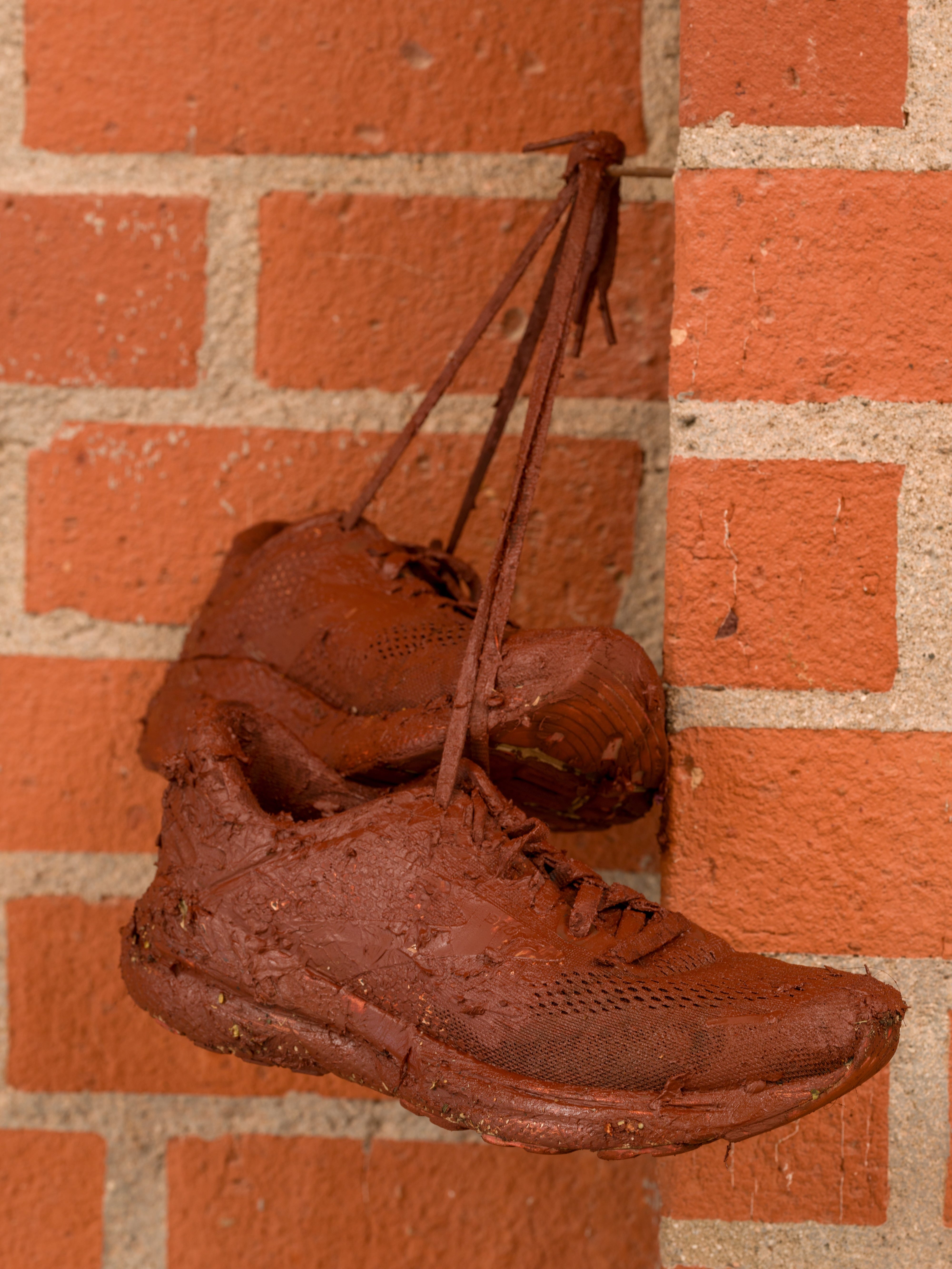
That feeling of being in multiple locations at once is palpable to me in the works by Mohammadreza Jahanshir and Carmen Argote. Currently based in Tehran, Jahanshir is originally from Tabriz, and is slated to begin his studies at the Kunstakademie Düsseldorf later this year. His video Glory-50904020 (2026) served as a kind of guide for Argote’s response, which took the form of a pair of sneakers caked with burnt sienna paint.
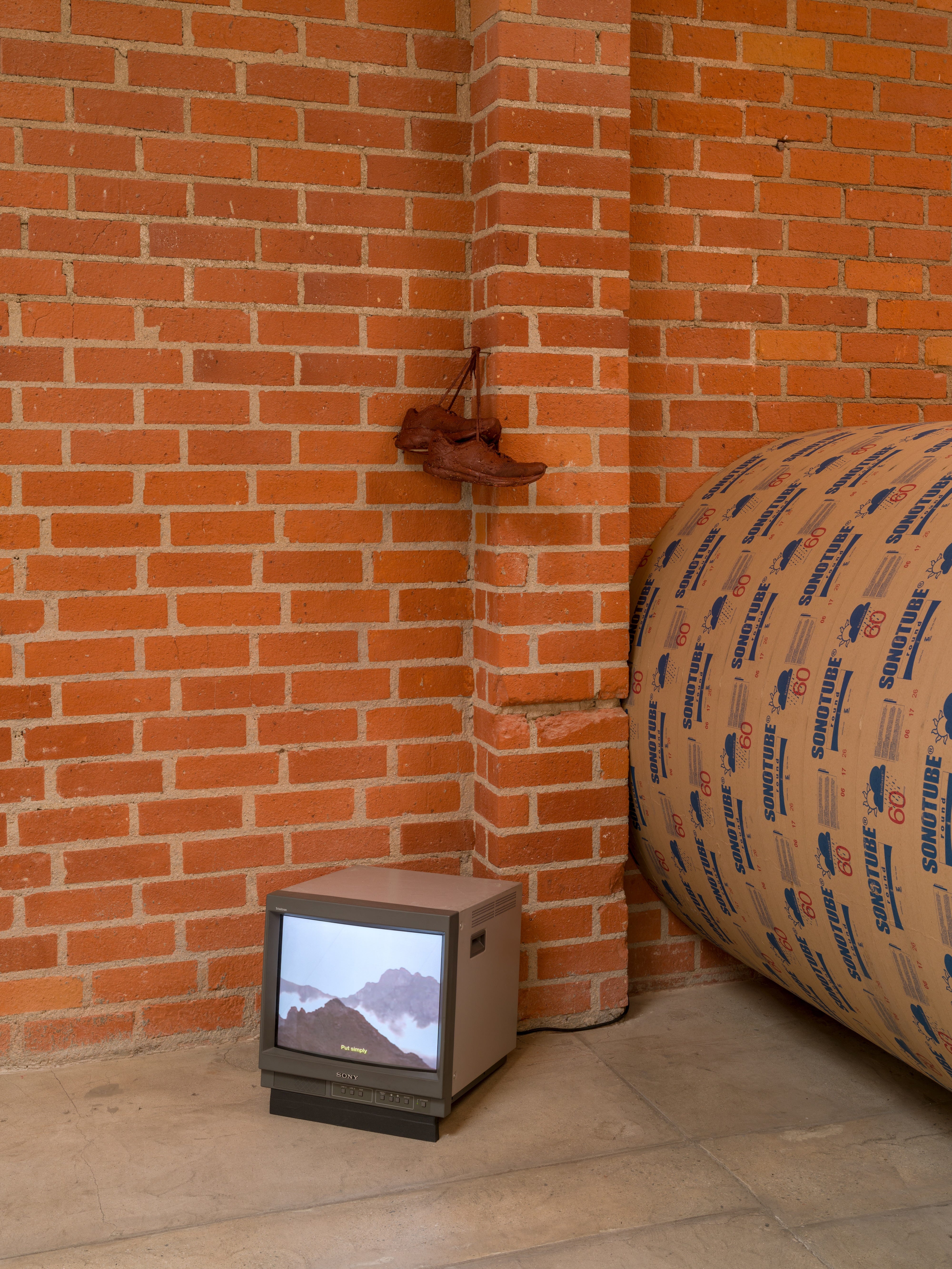
The two artists conducted simultaneous walks in Tehran and Los Angeles in the days just before the show opened, a gesture surely rooted in the history of early conceptual art. Jahanshir’s proposal called for a specific sculptural object involving a sheet of rusted iron, linen, and a printed photograph of Mount Eynali, but Argote’s idea was to forego the need for this object and initiate a walk. I appreciated how Argote’s interpretation of Jahanshir’s idea produced a different relationship to the subject matter, reflecting their own sensitivities as an artist.
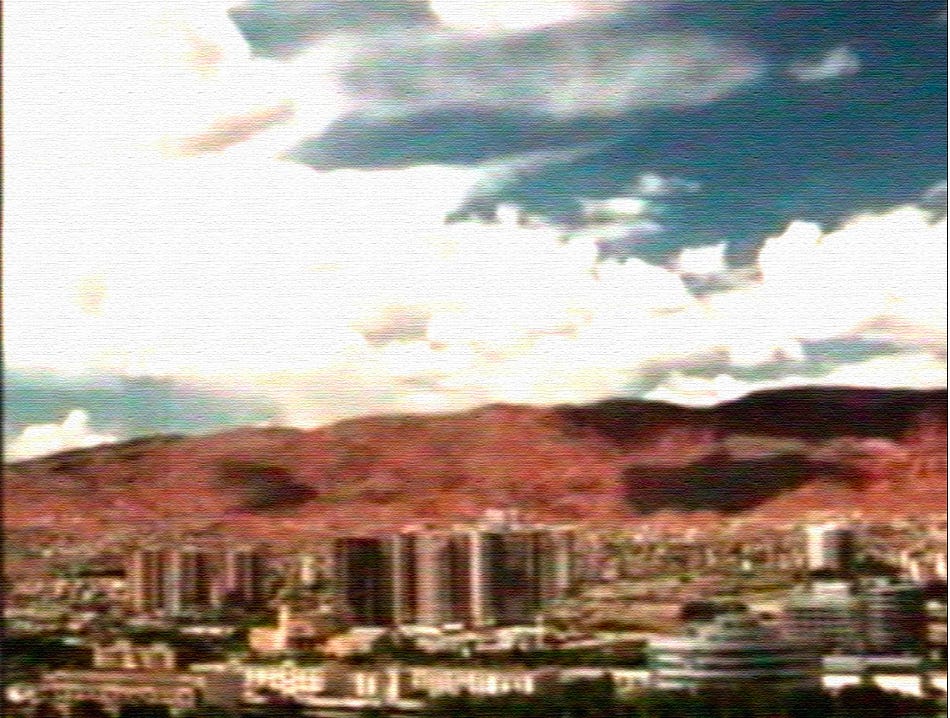
Jahanshir’s video deals with the overwhelming visual experience of watching missiles strike Mount Eynali in Tabriz and a mountain range in Karaj as he fled Tehran for his hometown. The lasting effects of this visual imprint—an image he described as being both “majestic and terrifying”— served as the impetus for their walk, which they titled as if two bodies in different geographies are sharing parts of the same path (2026). I hope the simplicity of this idea will be useful to Jahanshir going forward.
Tehran-based artist Shahrooz Mohammad produced something of a photographic travelogue documenting his forced departure from Tehran with a small group of friends the morning after the air strikes that initiated the current war. His images are arresting because of their intimacy and the way they represent a kind of normalcy set against the backdrop of war and lurking anxiety. His original proposal called for the photographs to be printed as a publication, but we decided together to realize this work as a digital slideshow, pairing his original images with their matter-of-fact written descriptions, and photographs produced almost exactly six months later in response by Los Angeles-based artist and writer Juliana Halpert. The side-by-side comparison of the two suites of images provided contrasting perspectives, even as they aspire to a kind of iconographic simultaneity. (Halpert only received the written descriptions to work from.)
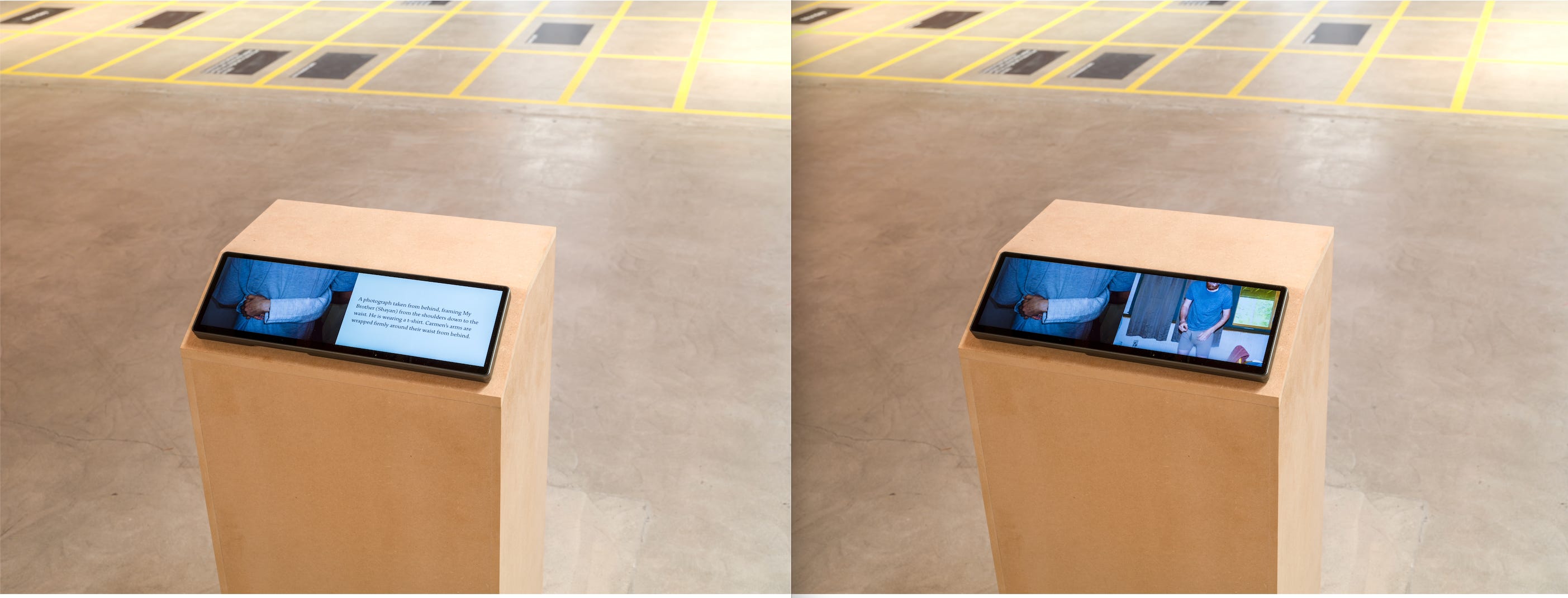
It so happened that Halpert was visiting family in Vermont when I contacted her about the exhibition, so her photos provide an even more unique take on what America looks like as its wars rage on elsewhere.
Alongside the empathetic pairings, there are two contributions that are singularly credited to artists in Iran. How did Negar Karimkhani and Shabahang Tayyari elude the paradigm?
It’s true. Negar Karimkhani’s contribution was an important element. She’d learned of the exhibition early in its planning stages and contacted me through the curator Ashkan Zahraei, who had shared a draft of my initial letter with her. She sent along text she’d written, an essay titled “Stream Interrupted: A Note on the Politics of Access.” I immediately realized that the kind of context that the piece provided could be particularly meaningful for the artists working on the project here in the States—many of whom had no previous experience of Iran—to help them understand what someone’s working conditions may have been like.
(I also shared a handful of texts from inside Iran that Naghmeh Sohrabi had translated and published to her blog, These Are the True Things.) It made sense to list Negar as a contributor to the exhibition. Her piece helps us understand the capriciousness of the internet in Iran and how access—or lack thereof—is weaponized and subsequently bypassed. But it also underscores the idea that it is easier for most people to imagine life during wartime than to imagine life without the internet.
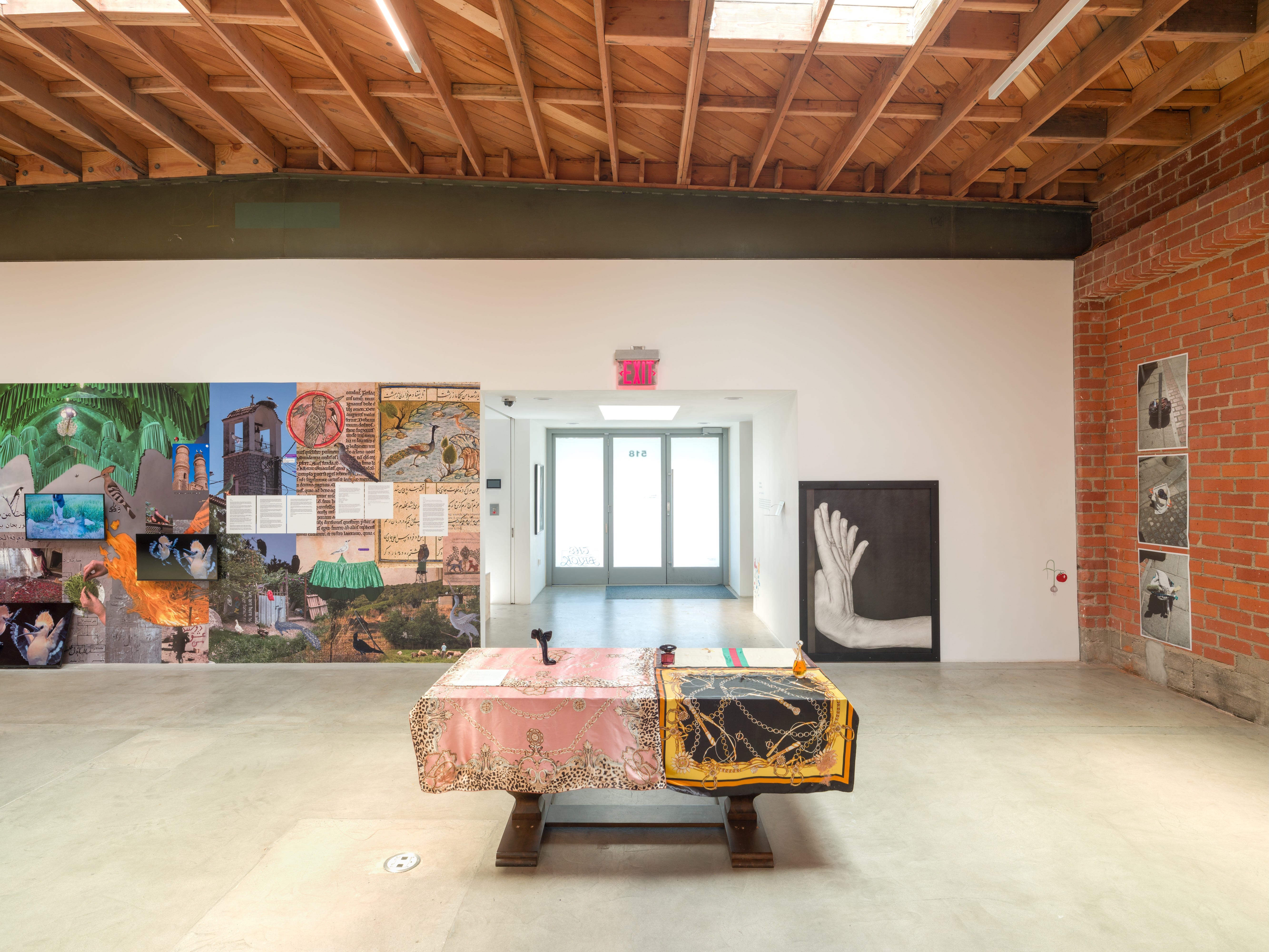
The inclusion of Shabahang Tayyari also derived from a text authored for the occasion—a letter of sorts (not unlike a proposal) specifically addressed to me, essentially calling out a list of materials for what was to eventually become a sculpture. The resulting work is obliquely titled to (2026), consisting of a table along with three scarves and three bottles of perfume, which Shabahang’s aunts brought to Los Angeles in advance of the opening as unwitting collaborators in his project. The text is a letter to me, as the curator of the exhibition. It is a proposal, but it is also a set of instructions to produce the work, which purports to be a curse.
Shabahang felt there did not need to be an interpreter, so of course the task fell on me. I ended up acting as if I were a medium channeling his presence in the show, facilitating the curse he had cast upon me and the exhibition from afar.
DO YOU HAVE A SENSE OF HOW THE ARTISTS IN IRAN HAVE RESPONDED TO THIS PROCESS, AND TO THE WORKS IT PRODUCED?
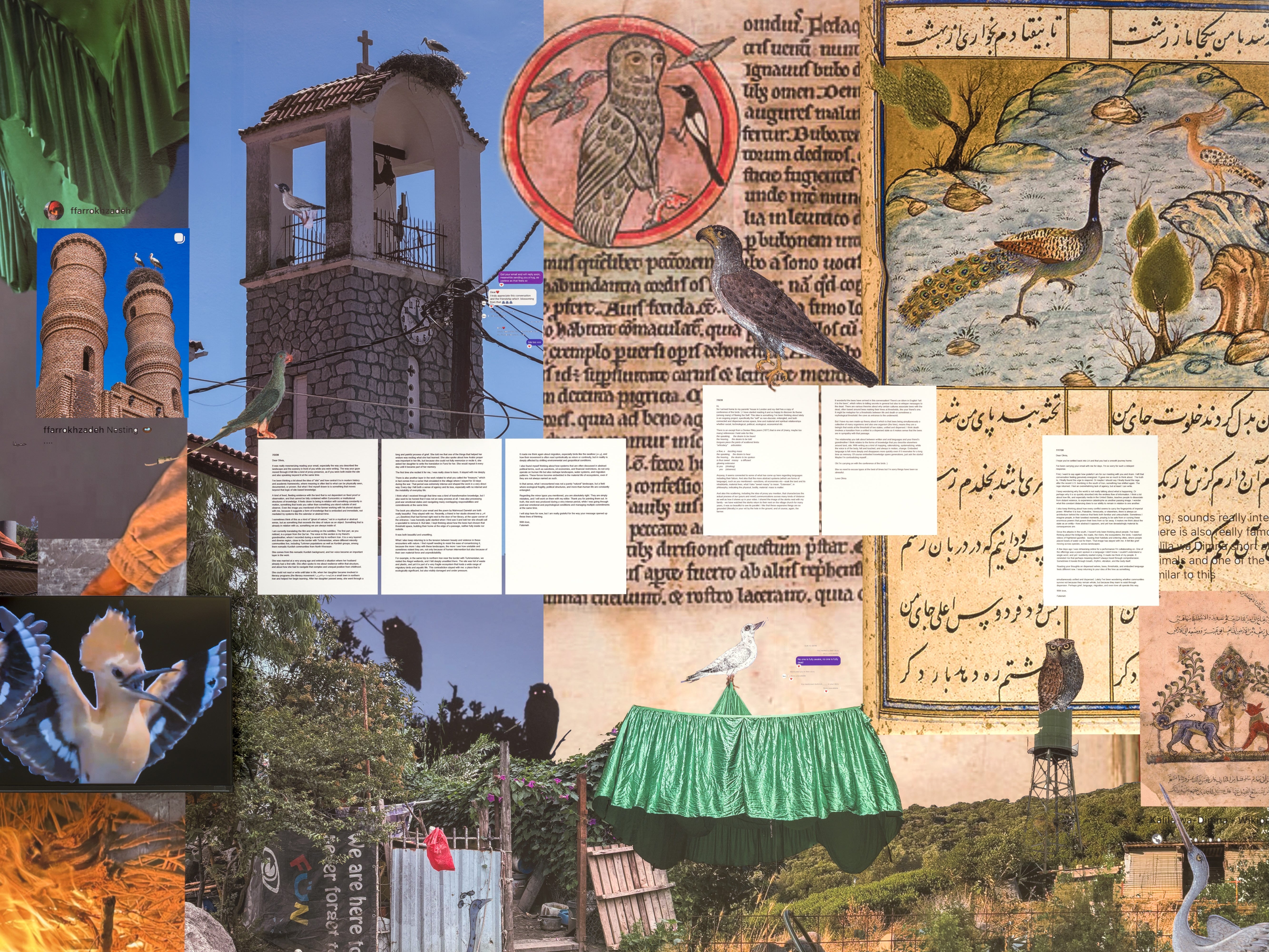
It’s an open question. Perhaps it was a more rewarding experience for some than it was for others? I hope, for instance, that the rich correspondence that unfolded between Fatemeh Kazemi and Olivia Mole, or Hedieh Ahmadi and Vishal Jugdeo, will continue. I don’t want to pretend that this was some inherently feel-good exercise meant to bring everyone closer together. It was important to represent the spectrum of experiences in an honest fashion. The artist Charles Gaines once told me in passing that his teaching career was for the most part dedicated to helping artists see their work outside of themselves, as part of a larger context of which they were willingly or unwillingly a part. I found that idea to be helpful here, and often relayed to the artists that their works for the exhibition should feel as familiar as they do foreign. Having provided the conditions for that experience to occur will hopefully resonate well beyond the exhibition; perhaps it might help us all see our work differently in the future. There are those who understand this and those who don’t. I’m fine with that; it doesn’t have to be for everyone. Some of the artists in the show probably felt alienated by the experience or felt disconnected to what was produced.
I think it’s something that we’ll continue to work through in whatever comes next. I’m in the early stages of discussing the possibility of some iteration of the show traveling to the Polygon Gallery in Vancouver next year. It could never be the same as it was in Los Angeles, so it’s an interesting exercise, thinking about how it might take shape in a different context, guided by a different set of parameters. Some of the artists may not want to participate, and we may find that some projects don’t work outside of the initial context. It will be interesting to see if the compression of that first show can translate in a way that also represents the slow tediousness and paralysis of this war—whatever ends up happening between now and when the show opens.